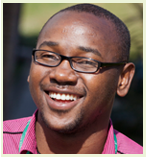
It’s half the opportunity cost for more than double the global network, compared to most MBA programmes!
Michael Abare

Why did you decide to do an MBA at INSEAD?
Well, I don’t have the typical global profile of most candidates but I wanted to try something different to test myself alongside some an incredibly engaging and diverse community. Based on discussions with alumni, I realised that INSEAD would be a more perspective-changing experience than any other school. And I thought it would differentiate me more, even in the US job market. Plus, at one year, it’s half the opportunity cost for more than double the global network, compared to most MBA programmes!
Did you get what you bargained for!?
INSEAD has certainly changed my perspective. In the classroom, a wide variety of viewpoints are encouraged and accepted. It helps to delay your judgement – you have to test out your hunches instead of just going with them. It’s also truly collaborative and helps you understand where your strengths and weaknesses lie.
When I became President of the Student Council I looked for people with different perspectives to be on the committee, whereas before I think I would have looked for people I just got along with.
What does the Student Council do – and what have you achieved?
It has a number of roles, but we mainly interface with the administration, run the welcome week for new students and help with funding and a number of events. One of my small victories has been to change a major policy on the class resumé book and host a panel discussion on Indonesia. We’ve also been consulted on larger issues. For example, the Dean Search Committee asked for our feedback. We were quite surprised, but it makes sense given the open community environment that INSEAD fosters.
What do you mean by “community environment”?
All the professors I’ve reached out to individually have made time for me. I enjoyed lunch with several of them and always felt welcome to visit them if they were in their offices. I’m not sure I’d have gotten that at other schools. And then there’s the group work. In a group with such divergent viewpoints, you start to think more clearly about where you can add value and more importantly, when to listen. I was the qualitative, humanities extrovert in my group – and the only native English speaker!
What else is different about the learning experience at INSEAD?
The faculty are all intellectually accomplished but they deliver differently as well. All the professors have their own unique style and in one semester, I had teachers from 4 different continents! The variety of perspectives and teaching styles keeps you on your toes and I can’t forget all those fantastic anecdotes about Australia from my management accounting professor!
Also, INSEAD’s not just case studies all the time. There are lots of simulation exercises and external speakers too. I was also very impressed by the entrepreneurship electives as well as the class on China strategy. INSEAD is becoming more and more known for its expertise in entrepreneurship and I believe it will continue to churn out some of the more innovative global leaders of the future.
What do you think will be your key take-away from the programme?
The time I take to pause. I don’t expect to have the answers right away, because I think less superficially and more strategically than I used to. Well, at least that’s my perception. I consider how to bring people along and take a step back to consider how I personally can add value. I don’t just take out my hammer and bash the nail anymore!
Where next after INSEAD for you? Is it the career you always wanted?
I’m returning to the US for a general management apprenticeship programme in financial services. But I’ll still benefit from the global network. It already gives me an appreciation of change and how the global context in which we define business is constantly evolving. While I could have returned to technology or stay and was tempted by some roles in emerging markets, I went with what my intuition told me was right. I believe that if you put in the time to reflect on what you really want and do your due diligence, you’ll find a job that gives you something you really want.
Finally, what advice would you give to next year’s class?
Don’t eat alone! There are so many great places to sit down, grab a bite and have a conversation here in Singapore. I’ve had some of my best times talking to people at hawker stands around this island nation. And if you’re hesitating because you don’t feel like you’re a global citizen, remember the old Chinese proverb, “The journey of a thousand miles begins with a single step.”