
The Chinese Energy Transition: Learnings and Observations From the INSEAD MIM ’27 Study Trip
Who would have thought that the world’s largest CO₂ emitter would also become one of the global leaders in clean energy?
For years, China was primarily associated with coal plants, industrial pollution, and rapidly rising emissions. Yet today, the country dominates global solar manufacturing, leads the electric vehicle market, and accounts for roughly one-third of worldwide clean-energy investment. According to the International Energy Agency (IEA), China invested approximately $675 billion in clean energy in 2024 alone, nearly double Europe’s estimated $370 billion. It also reached its 2030 wind and solar capacity target six years ahead of schedule.
What is happening in China is no longer simply an environmental transition. It is an industrial and geopolitical transformation that Europe can, and should, learn from.
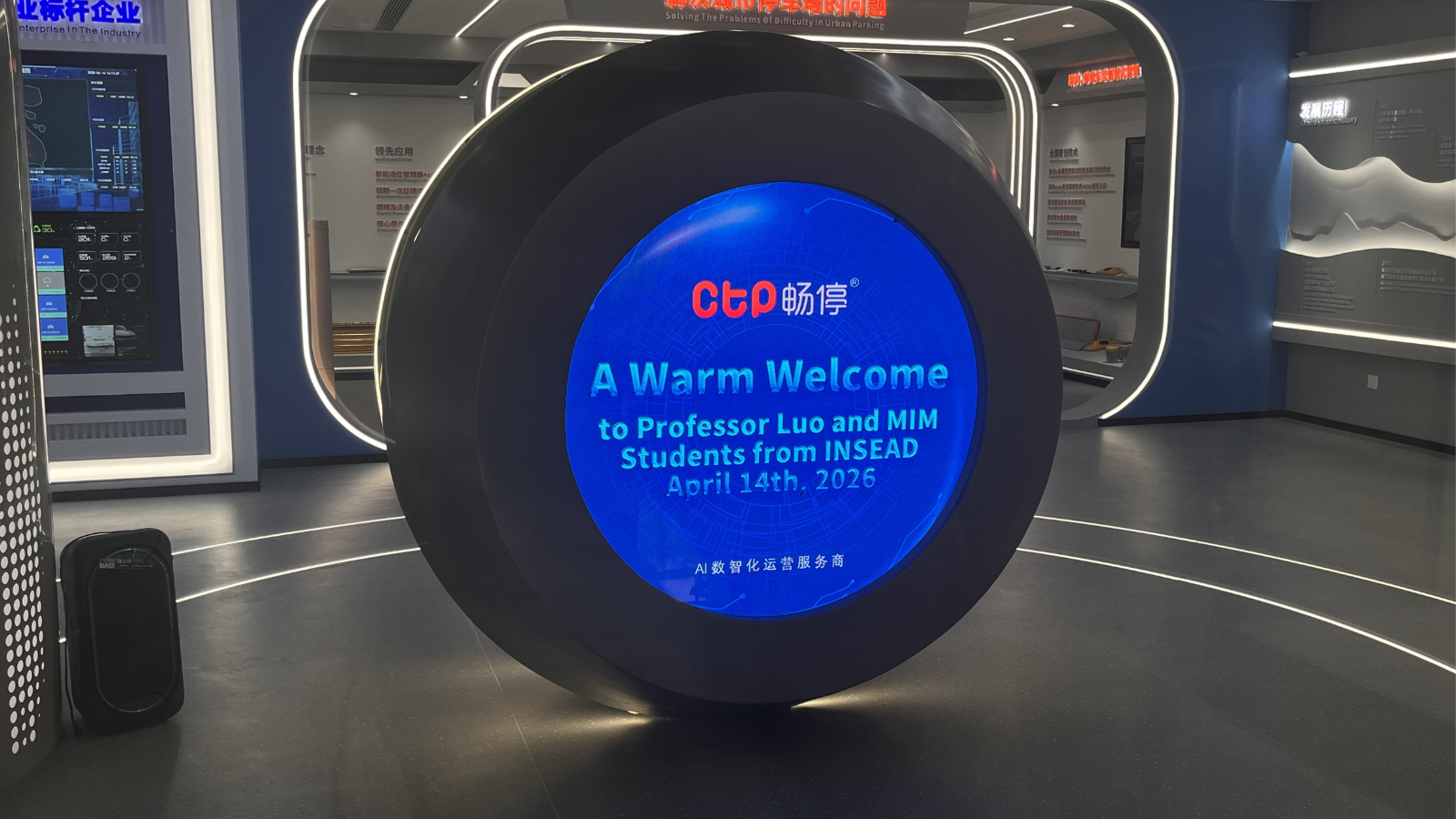
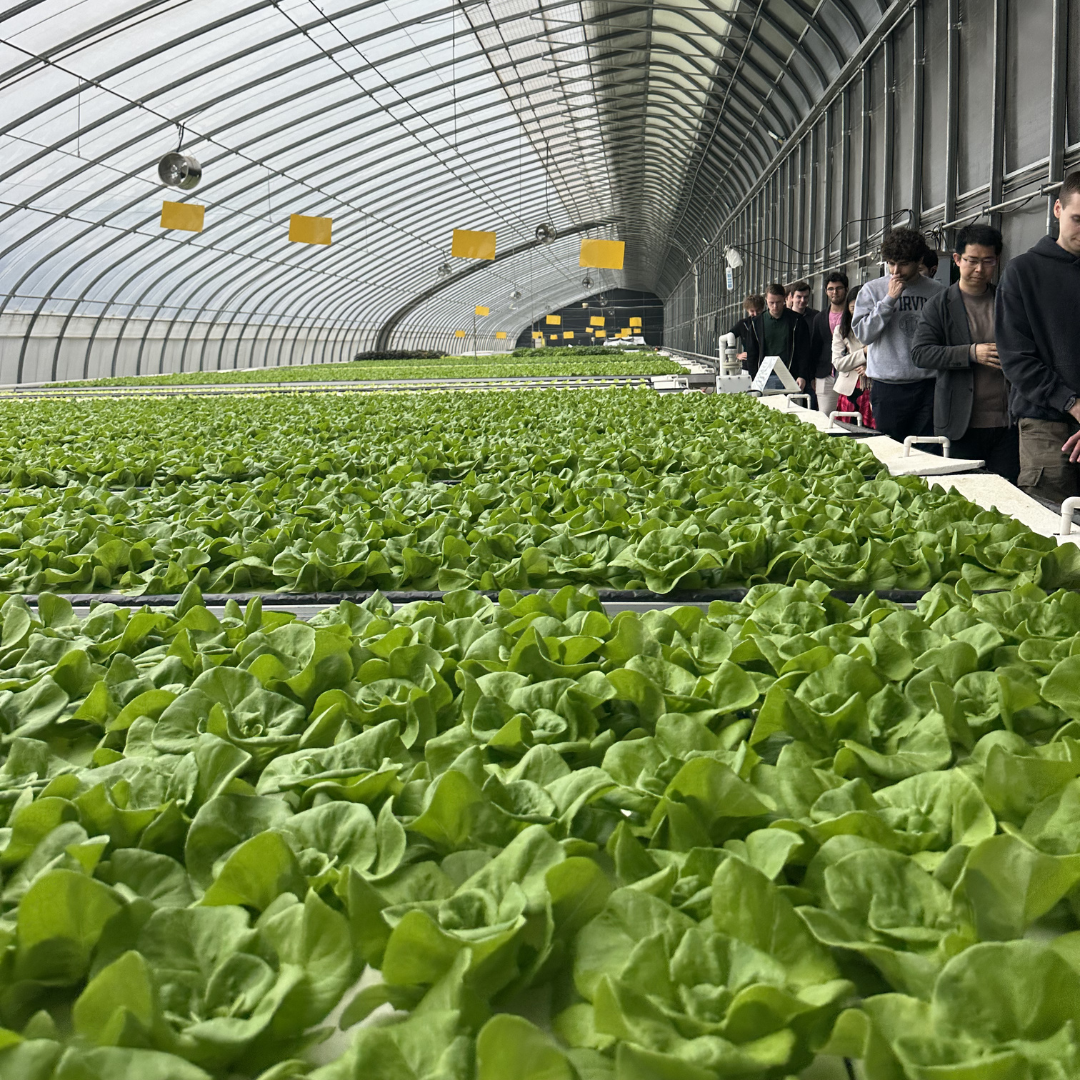
During our recent MIM’27 INSEAD study trip through China, this became impossible to ignore. In city after city, electric vehicles dominated the roads. The charging infrastructure was deeply integrated into urban life. Companies, both tech and agricultural, were scaling technologies at speeds rarely seen in Europe, while investments in batteries, grids, and industrial ecosystems appeared coordinated on a national scale.
China positioned itself as a clean-energy and green-technology leader long before much of the world fully realised how strategically important the energy transition would become. The question is no longer whether this strategy is working. The more important question is how China is accomplishing this, and what Europe can still learn from it.

One explanation lies in long-term strategic planning. China’s government has spent decades identifying sectors it considers critical to future economic and geopolitical competitiveness. Through successive five-year plans, it systematically prioritised solar manufacturing, battery production, electric mobility, and grid expansion. While Western democracies often struggle with changing political priorities and short-term policy cycles, China maintained strategic consistency across sectors that require decades of investment.
But what stood out during our visit was that China’s advantage is not only about producing more solar panels or EVs. It is about understanding the entire system behind the energy transition.
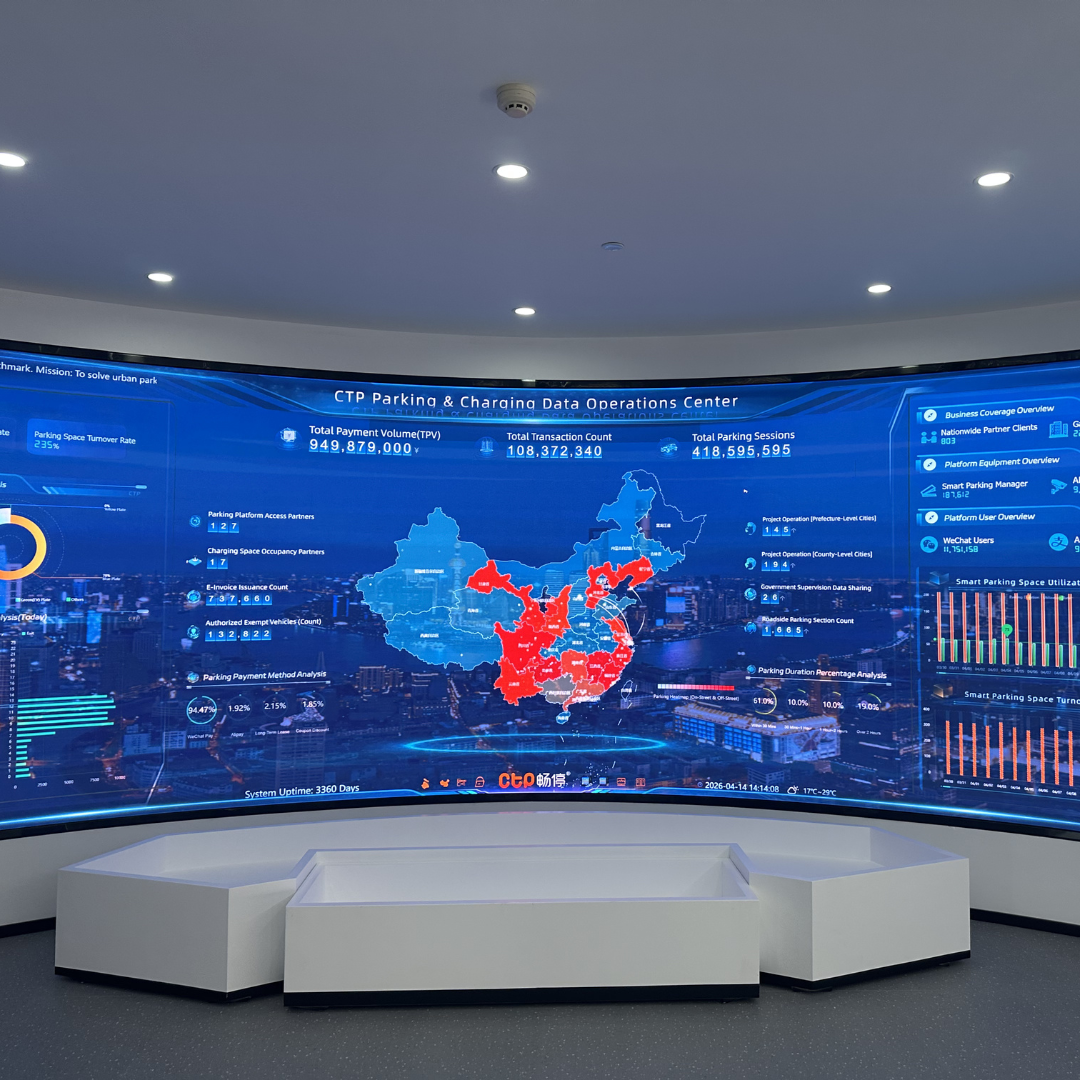
At INSEAD, Professor Pierre Hillion often emphasised that one of the greatest bottlenecks in the global energy transition is not renewable energy generation itself, but the infrastructure surrounding it, particularly electricity grids and battery storage. Renewable energy can only scale if countries are able to store, transport, and integrate electricity reliably into their economies. China appears to have understood this early.
Its investments span the entire clean-energy ecosystem: battery technology, mineral processing, charging networks, transmission infrastructure, and industrial supply chains. In 2024 alone, China invested more than $80 billion in power grid infrastructure, including ultra-high-voltage (UHV) lines.
Rather than treating climate policy as a standalone issue, China increasingly approaches energy resilience as a structural economic and security strategy.
This is also visible internationally. Chinese firms have spent years financing and building renewable-energy infrastructure abroad, including large-scale solar projects across South America, Africa and Asia. These investments are not purely environmental; they also strengthen China’s position within future global supply chains and geopolitical networks.
Europe should pay close attention.
As I argued in my June 2025 thesis on military emissions and energy security, Europe is entering a period of rising geopolitical instability and rapidly increasing defence expenditure. NATO’s new 5% spending benchmark reflects growing concerns about strategic vulnerability. Yet discussions around security still often underestimate the role of energy dependence.
Recent tensions surrounding the Strait of Hormuz once again demonstrated how fragile fossil-fuel supply chains remain. Disruptions in critical maritime routes immediately affect energy prices, industrial stability, and geopolitical risk. Even defence sectors themselves remain deeply dependent on secure fuel access.
This is where China’s approach becomes particularly relevant.
The clean-energy transition is not only about reducing emissions. It is increasingly about industrial competitiveness, strategic autonomy, and resilience in an uncertain geopolitical environment.
The argument here is not to say that China is a ‘better’ country or political power; China is still the largest emitter, and its investments in countries in Africa have created many questions about neo-colonialism and the morality of China's growing influence in these countries.
Also, China has not found the solution to an energy grid big enough to exclude fossil fuels once and for all, as the transition remains highly complex; thus, this rapid addition of renewables occurs simultaneously with the continued construction of coal plants to guarantee energy security.
The point is, however, that Europe needs to move beyond viewing climate investments merely as regulatory obligations or economic costs. China increasingly treats the energy transition as an opportunity to strengthen industrial leadership and reduce strategic dependence. Europe too often still debates it primarily through the lens of sacrifice.


