The unpreparedness for the job market and cultural unawareness were the main factors I needed to challenge. INSEAD was that challenge.
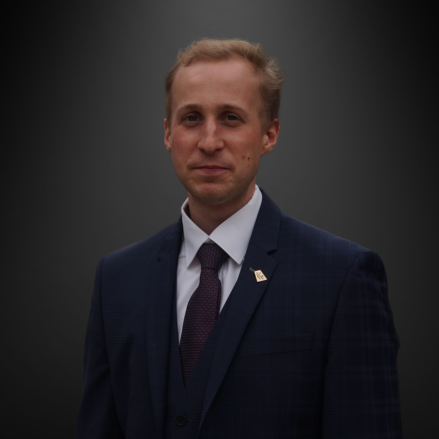
Nick Bischofberger

Tell us a little about yourself – both personally and professionally.
I am a nature-loving boy scout and versatile and curious advisor to senior leadership teams.
I never liked the stigmatised title "consultant". Still, my class elected me as 'The most likely to stay in consulting'. Not sure whether this is a real honour, but I do like my current work at Bain & Company.
Besides, I love to engage proactively and make things happen. Either as camp leader of the boy scouts in my home town or as elected Vice President of the Student Council during the MIM. Together with a bunch of great people, we made things happen, whether it was the Quantum Computing Case Competition in Zurich. Mooncake event during Mid-Autumn Festival, Indian Diwali party, Chinese New Year celebration, Grad trip to Bali, Commencement ceremony in Singapore, and many more.
Why did you choose to pursue the INSEAD MIM?
I needed an international challenge.
Growing up in Switzerland with one of the best educational systems is an absolute privilege. But, this privilege came with two flaws.
Firstly, I was not prepared for a competitive job market. The Swiss higher education system is characterised by publicly funded universities that lack specialised career support and have low barriers to entry for Swiss nationals.
For example, career centres don't have dedicated industry experts that students can consult with. Also, there is no university entry exam, meaning no need to study for a competitive exam. Don't get me wrong, I am not saying that a highly competitive and specialised system is better. My point is that I was lacking the preparation to understand what is required to build a successful career in a specific industry.
Secondly, I was lacking cultural awareness. The kind of cultural awareness that would enable me to build long-term international friendships. My undergraduate school was attended mostly by German speaking students that share similar working styles and cultural elements, such as a direct communication and feedback culture. This scarcity of international cultures didn't allow for enough reflection on different working styles.
For example, when I was working with Asian students on a machine learning project during my undergrad studies, I was never able to effectively communicate and build personal relationships. Looking back, I was simply lacking the knowledge of how to work with other cultures.
The unpreparedness for the job market and cultural unawareness were the main factors I needed to challenge. INSEAD was that challenge (and still is). I do not believe that there is a 'best university' for everyone. But, I do believe that the MIM programme was a great choice to address the two factors described above.
Any memorable moments that you are still fond of?
In the first week of the MIM, I made a classmate cry. And, it wasn't because of happiness. This incident opened my eyes to my cultural unawareness.
Before INSEAD, I saw myself as a well-travelled student with lots of knowledge about different cultures.
I had visited more than 20 countries and learned a lot about the history of other cultures in high school. Thus, I would have never expected what happened to me during the first week of the MIM.
As part of a dedicated launch programme, my team (that I would work with for the rest of the year) was tasked to complete a role play simulation competition. Thereby, every team member was assigned a specific role with an individual goal (that could not be shared with the others), as well as a team goal.
After 60 minutes of intense discussions, the game ended with a mediocre result for our team. While I had partially achieved my individual goal, most other team members had not. We scored in the bottom quartile in terms of overall team score. And it became even worse. After a lunch break, I re-entered the classroom and found one of my team members crying. I was highly confused because I didn't understand what the reason could have been.
As I approached the person, another team member took me aside and explained the situation. It turned out that my intensive discussion style led to one of the team members feeling intimidated, because in that person's culture it is uncommon to openly and directly show disagreement.
Rather, it is common to show politeness, even when disagreeing. When I heard this I was shocked, because I would have never expected that my behaviour would have offended anyone, neither was I aware that other cultures preferred a more indirect communication style. The situation resolved itself, when after class we entered in a lengthy discussion around cultural norms in the team and openly discussed how such situations could be avoided going forward.
Over the coming months, we developed team principles that outlined the behaviours we would like to see in each other. The discussions in the team that led to those principles made me understand on a much deeper level the cultural biases I possessed. I learned that visiting a country and actually working with people from that country is a whole different story. And you will experience that too, trust me.
The expectations in terms of punctuality, level of effort, communication style, and so many more things vary significantly. And, even though the example I just gave might seem like a no-brainer to you, it was an eye-opener to me.
It’s been over a year now since you graduated from the programme, how have things been for you? Has the programme helped you professionally? What was the impact of the Career Development Centre on your professional development?
At Bain & Company in Zurich, I get to work with a variety of different cultures everyday. The partner on my first project was Greek, for my second project I was relocated to Saudi Arabia, and on my current project I will be working in the US for two months.
In all of these situations, I look back happily on the exposure I got at INSEAD, and in particular, the field trips to Abu Dhabi and San Francisco.
These experiences have made my professional and personal life easier to manage and more fun every day, as I am better able to build long-lasting international friendships.
In fact, at the very moment I am writing this, I am sitting on the train from Kyoto to Tokyo to visit a good Japanese friend from the MIM over a glass of sake.
Parting words of wisdom, or any advice for prospective students and would you be willing to be contacted for any more information?
Let me part with this last thought: I came to INSEAD to learn about international management. I learned along the way that learning about management also involves exposure to work and live with different cultures. So, here is what I recommend to every prospect MIM:
1. Choose the INSEAD MIM only if you are eager to care and learn about management of culturally diverse teams.
2. Read Erin Meyer's book 'The Culture Map' while you start the programme, as it will help you understand some of the cultural differences.
3. Actively seek opportunities to work with multi-cultural teams inside or outside the classroom (e.g., case or venture competitions) .
4. Conduct regular feedback rounds where you discuss openly your observations on improving your team work.