Just build as many genuine connections as you can, because you never know who is going to show up in your life.
Xuelian Tai
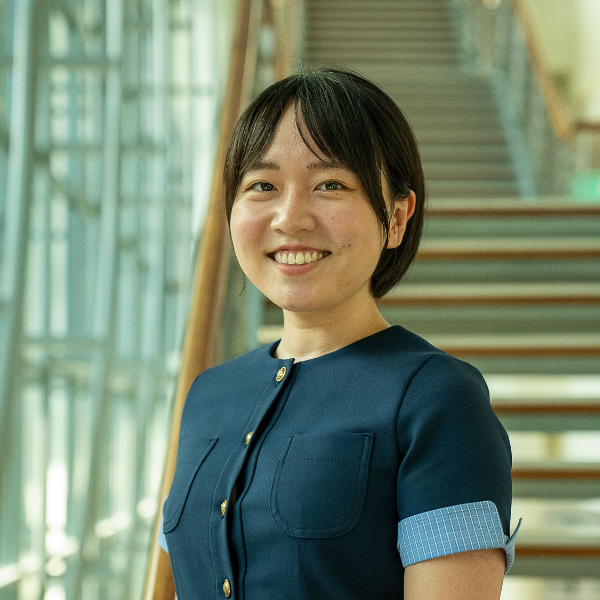
Why did you decide to pursue the MIM programme at INSEAD after your finance undergraduate degree at Nankai University?
I am from Tianjin and I studied finance at Nankai University, one of the top universities in China. It gave me a strong foundation, but most of my studies were in Chinese and I knew quite early that I wanted to build my career in a more international environment.
The real turning point was a summer school programme at HEC Paris. I completely fell in love with it: the classroom energy, the international students, the culture, the way people talked about ideas. When I came back to China, a friend who knew I was looking at HEC and ESSEC asked me, "Why not INSEAD?" Honestly, at first I hesitated. I did not have much international experience yet, so I was not sure I was the kind of student they were looking for. But she told me to just try.
The moment I started reading about it, I thought, "Oh my goodness, this is my school." Everything about its global ambition resonated with me, and having the Asia Campus in Singapore as one of the main campuses made moving my career into Asia so much smoother.
I did not come to INSEAD looking for a dream. I already had one. What INSEAD gave me was a bigger world to chase it in.
You were awarded the prestigious L'Oréal for Youth Scholarship. What was your journey to securing that funding?
The L'Oréal for Youth Scholarship is worth €25,000, and it is very competitive, so receiving it meant a great deal to me. I applied because I genuinely needed the support. My family had been under real financial pressure, and during my undergrad, I worked part-time to cover my own tuition and living costs. To prepare, I reached out to previous recipients on LinkedIn to understand how they had approached the essays and interviews.
The process took several rounds, and it asked a lot of me. In the early conversations, I focused on my green finance path and the corporate strategy work I had done in China. But the deeper interview became much more personal. They asked me to talk about a moment of real resilience, and I chose to be honest about a difficult chapter in my life. Rather than letting it make me smaller, I tried to turn it into something constructive: into more empathy, more courage and a stronger sense of responsibility toward other girls who need help. Bringing that honest story, instead of a polished one, let them see who I actually am and being chosen on that basis felt incredibly meaningful.
L'Oréal for Youth Scholarship
L'Oréal Groupe's L'Oréal for Youth (L4Y) strives to create a world where all young people have equal opportunities for education and employment. By fostering a supportive ecosystem, L4Y bridges the gap between school and work, equipping youth from diverse backgrounds with the knowledge, guidance and networks they need to thrive.
Learn more
You won a networking competition in your very first week at INSEAD. What is your secret to breaking the ice, especially for students who might find business school intimidating?
It is funny because people usually describe me as bubbly and easy to talk to, but I am also very ambitious. I have never been shy about wanting to build something successful and meaningful, and yes, maybe become a little well-known one day. At INSEAD, I could say that out loud because people here take ambition seriously.
My approach to networking comes down to three things.
- Curiosity. I am genuinely interested in what other people are doing and building, and that opens up a much bigger picture than your own circle.
- Authenticity. I am aware of the strengths I bring as a woman in business, and I try to be approachable and real, so people feel I am there to listen and connect, not to pitch to them. When a conversation feels safe, the professional walls come down very quickly.
- Practice. Over the past six months, I have worked twice a week with a tutor, sharpening how I communicate in professional settings. I wanted people to grasp not just my words, but my ideas and my personality, clearly and without friction.
Also, you really do have to put yourself out there. Confidence is built by showing up again and again, not by waiting until you feel completely ready.
How did the INSEAD curriculum and the actual modules help prepare you for the workplace?
One course that completely changed my perspective was Managerial Accounting with Professor Stice. I used to find accounting boring because I thought it was just memorisation, whereas what I really wanted was strategy and investment thinking. But Professor Stice was so passionate that his enthusiasm rubbed off on all of us.
He showed me that accounting is really the data room you need to build an investment thesis, and that changing a single assumption can completely change the outcome. That is something I use in my venture capital (VC) work every day now.
The Singapore study trip was another highlight. Being around so many entrepreneurs and investors made me want to build something of my own again.
A friend with an engineering background and I even started sketching out a dating app for seniors in Singapore. We have paused it for now because the operational side needs more time and resources than we can give it at the moment, but that spark came straight out of being in the VC and startup world at INSEAD.
Designed to empower the next generation of well-rounded, agile-thinking and innovative individuals.
The INSEAD Master in Management (MIM) is a transformative 14-month programme for candidates typically aged 19-24, designed to prepare the next generation of agile, innovative, and well-rounded leaders. Rooted in INSEAD’s commitment to shaping responsible leaders, the MIM equips students with the skills to tackle global challenges and drive positive impact.
Learn more
How was artificial intelligence (AI) integrated into your MIM experience, and how did it shape your outlook on the future of work?
AI was already part of everyday life in the programme, but what stayed with me was not simply that it made us faster. In our Strategy course, the professors built AI directly into the cases. In one exercise, we could speak to fictional company characters on our phones, ask them questions, and get real-time answers as we worked through the situation.
AI is already changing many junior tasks. For me, using AI well means treating it less like a shortcut and more like a thinking partner that still needs direction. You need to give clever and clear prompts and check whether the final answer still follows the logic you started with. You need to test the assumptions it sets and know what actually drives a business.
Looking back at your 14-month journey, how have you changed, and what advice would you give to your past self?
It is quite emotional to think about, because it all went so fast. Some of the closest friends I made have just flown off to different corners of the world after graduation, and it feels sad not to see them on campus every day anymore.
But I feel so much more grown-up than I was a year ago. I am not just a student now. I am out in the real world, interning, looking for the next step, building a life and learning to stand on my own feet. Before INSEAD, I had plenty of ambition, but my map of the world was limited to what I had already seen. The two campuses, the scholarship, the alumni network, my cohort: all of it made that map so much bigger.
If I could go back to the August before the programme started, I would tell myself: "Do not be so stressed, and stop questioning yourself over and over. You are hardworking and capable, and so many people are going to love and support you. Just build as many genuine connections as you can, because you never know who is going to show up in your life."