
From Biopolymers to Water Sensors: What the Turner MIINT Programme Taught Us About Impact Investing
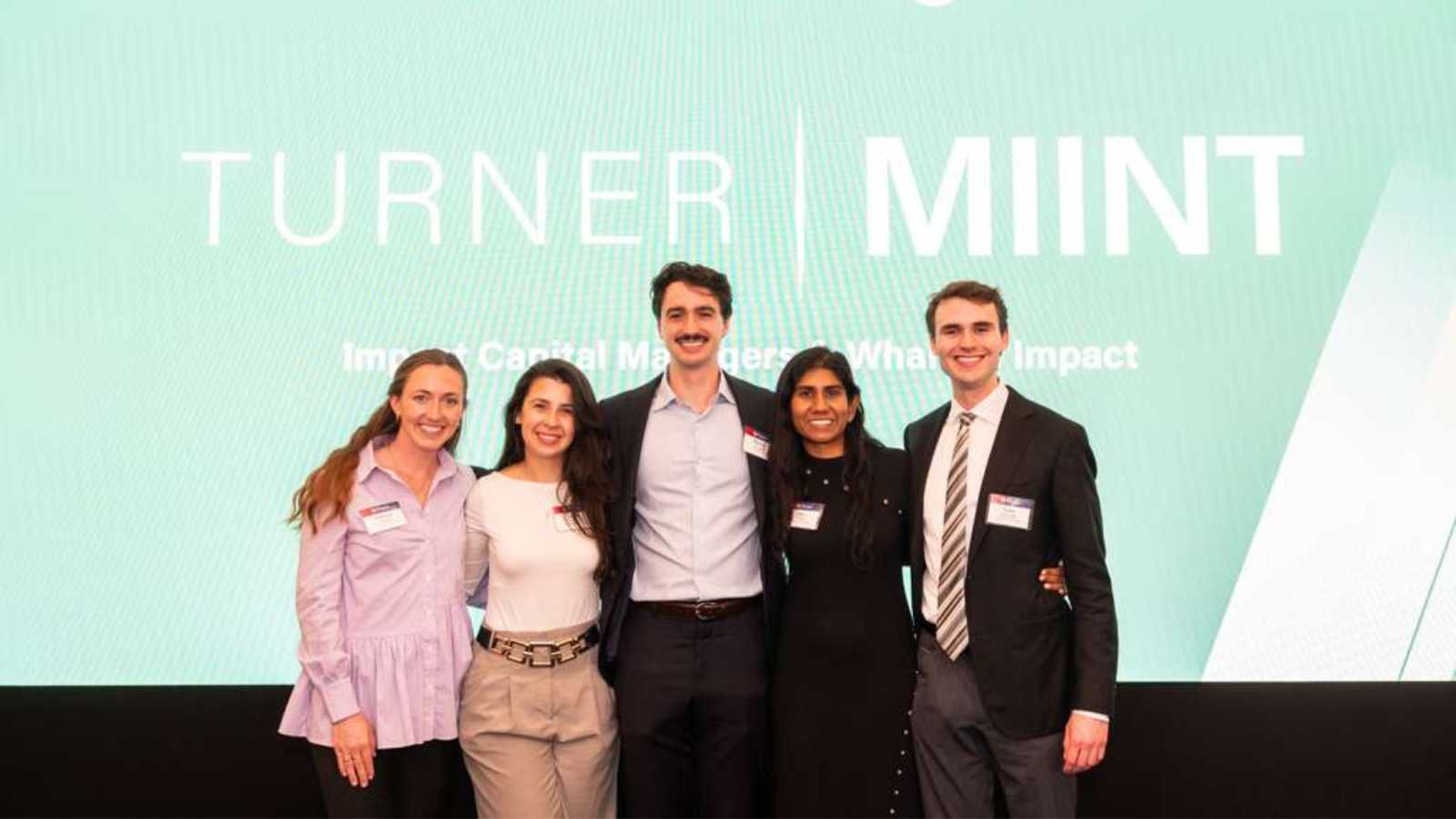
This blog was co-authored by MBA'26J students Ana Velozo dos Santos, Gabrielle Walzel, Kad Rajan, Luke Robitaille and Maxim Doiron
Impact investing is often described in simple terms: backing companies that deliver both financial returns and positive social or environmental outcomes. Evaluating those opportunities is far more complex. The Turner MBA Impact Investing Network & Training (MIINT) programme gave us the chance to experience that complexity firsthand.
At INSEAD, participating in Turner MIINT meant stepping into the role of an investor rather than simply studying investing concepts in a classroom. The programme combines a structured learning component with a unique hands-on process of sourcing and evaluating real ventures that are raising capital. Over several months, teams identify companies, conduct diligence, and ultimately present an investment recommendation to an international panel.
One of the most surprising parts of the process was how quickly we developed knowledge in areas we had never encountered before. Because impact ventures span such a wide range of sectors, each company required a deep dive into unfamiliar territory. Over the course of the programme, our team found ourselves learning about everything from biodegradable materials to water detection technologies. Becoming temporary experts in such specialised topics was challenging and fascinating.
The collaborative element of MIINT was equally important. Our team brought together people from diverse professional backgrounds, and that diversity shaped how we approached investment decisions.
That exchange of perspectives made the diligence process far richer than it would have been individually.
Within our INSEAD team, we screened, met with, and analysed dozens of ventures to eventually narrow it down to three finalists. To determine our final venture to present at Wharton, we ran an internal competition judged by a distinguished panel of practitioners and INSEAD alumni: Adrian Johnson (tech founder), Laura Noorani (impact investor), and Colleen Davis (Delaware State Treasurer), and our mentors Ernst Hoestra and Brianna Nelson, who guided us throughout the seven-month programme.
Our selected venture, NatureDots, is a deep-tech platform that develops digital twins of water bodies to help utility managers, conservationists, and aquaculture farmers optimise water quality and protect ecosystems. In the six weeks before the competition, we collaborated closely with NatureDots’ founders to refine our investment case. We also engaged with industry experts to deepen our due diligence.
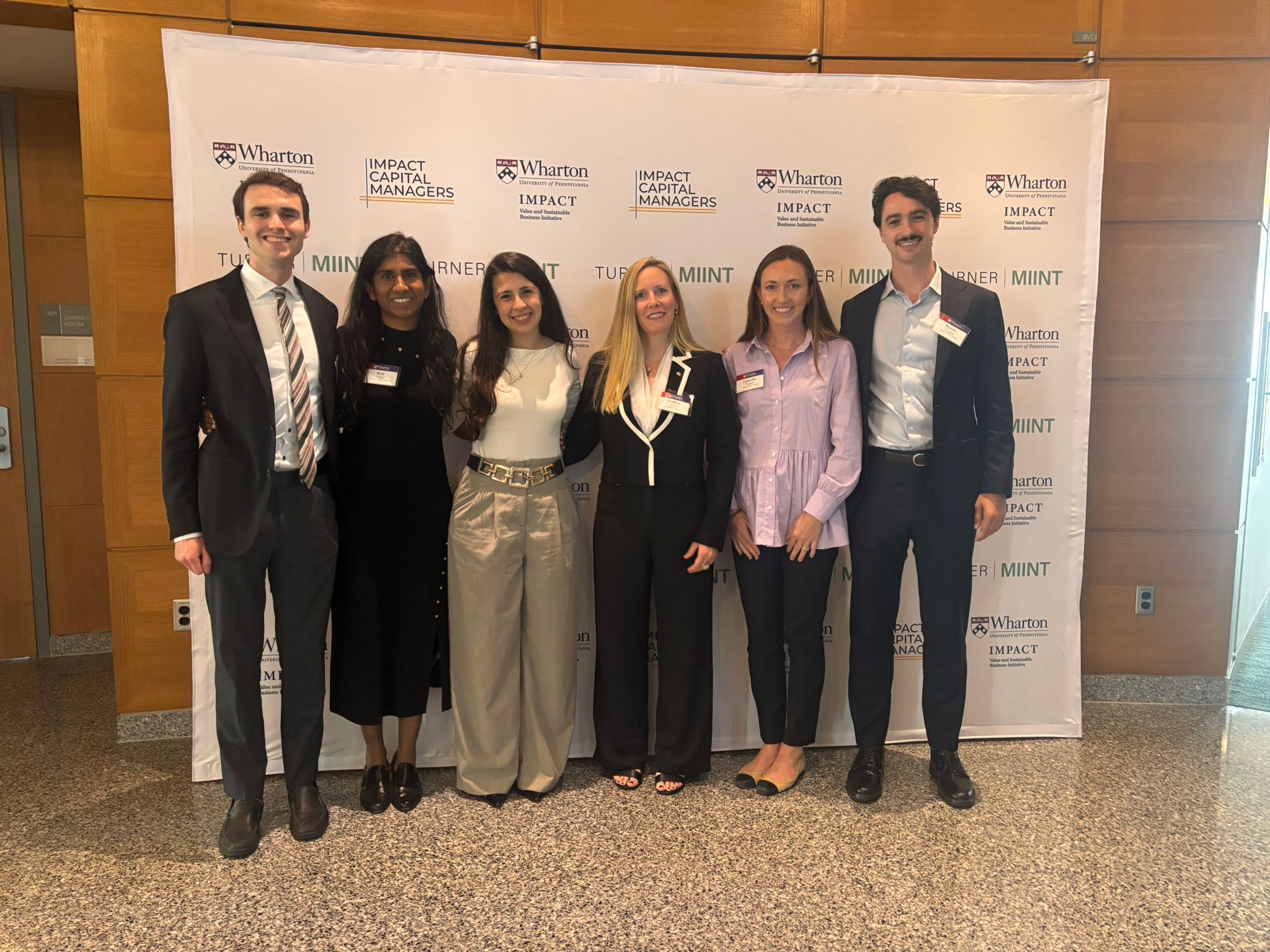
The final stage of the programme took us to Wharton, where teams from universities around the world gathered to present their investment recommendations. We were delighted to welcome a surprise guest: Colleen Davis, who had judged our internal competition and made the trip to Wharton to cheer us on.
What ultimately made MIINT stand out was its level of immersion.
The programme placed us directly in the investor’s seat of evaluating real ventures and defending our recommendations before an investment committee. That opportunity will remain a valuable part of our INSEAD experience.
Another significant aspect of the programme was the insight it gave us into the founder’s journey. Through the diligence process and conversations with entrepreneurs, we gained a much clearer understanding of what it means to build a company while simultaneously navigating the expectations of investors. Seeing that process up close created a deeper appreciation for the balance founders must strike between vision, execution, and financial discipline.
For many of us, MIINT reinforced a broader takeaway: capital, when deployed thoughtfully, is a powerful tool for addressing complex global challenges. Understanding how to evaluate opportunities that deliver both financial and societal value is a skill that we believe will only become more important in the years ahead.


