

My Summer Internship: Unlocking Corporate Fundraising for MSF in Latin America
My path to humanitarian fundraising
Before INSEAD, I spent four years at Mastercard Advisors working on growth and go-to-market strategy for banks, fintechs and retailers across Latin America and the Middle East. Most of my projects came down to a single question: how do you build a revenue stream that lasts?
This summer, I took that same question into a very different context. I joined Médecins Sans Frontières (MSF) as a Corporate Access Intern, working on how the organisation raises money from companies in Latin America.
Understanding MSF
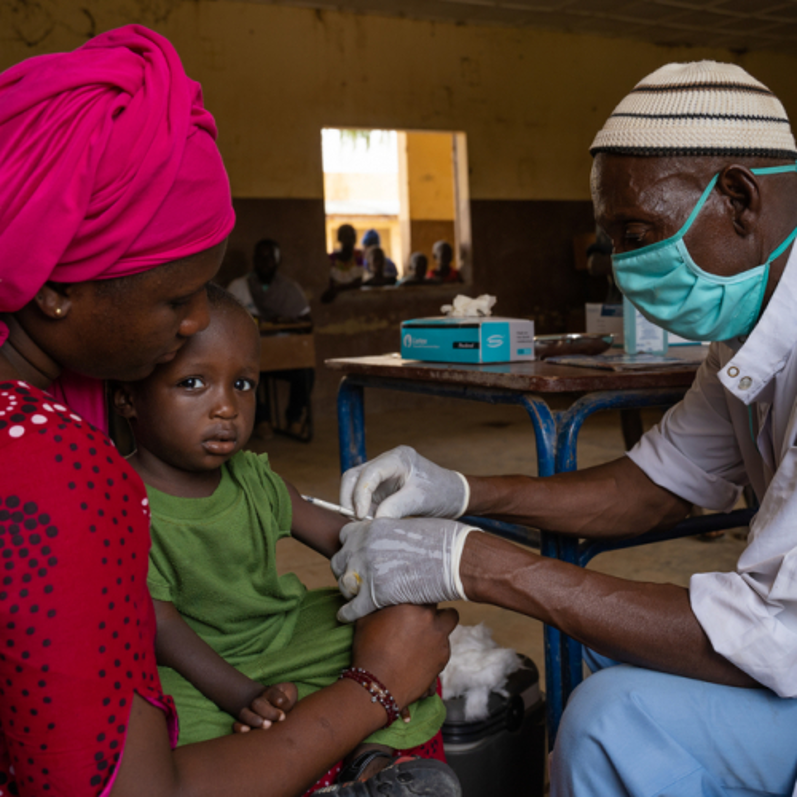
MSF is an independent international medical humanitarian organisation that delivers emergency medical care to people affected by conflict, disease outbreaks, natural disasters and exclusion from healthcare. The organisation is financed almost entirely by private donations, which is what allows it to decide where to work based on medical need rather than political or commercial interest.
What the role involved
My project focused on the corporate side of funding. The objective was to design a strategy that could unlock donations from large companies through two main channels: direct contributions from ESG and corporate social responsibility budgets, and employee giving programmes where the company matches what its own staff donate.
In practice, the work spanned mapping and prioritising potential corporate partners across the region, building the value proposition and the outreach materials, and designing the partnership structures themselves, from the first conversation to the point where a company signs.
Challenge your perspectives and empower your future with the INSEAD one-year MBA programme
Consistently ranked amongst the top one-year MBA programmes in the world by the Financial Times, INSEAD’s full-time one-year MBA programme curriculum develops successful, thoughtful leaders and entrepreneurs who create value for their organisations and their communities.
Key learnings
Recurring revenue is worth more
Individual giving in the region is heavily weighted towards one-off donations, which makes the funding base harder to plan around. Corporate partnerships behave differently. Once signed, they tend to renew; they follow predictable annual budget cycles, and matching programmes bring in individual donors as a by-product. A relatively small number of corporate agreements can therefore add more stability to the funding base than a much larger volume of one-off individual donations.
Scale creates bureaucracy
MSF is a large organisation with layers of bureaucracy, and this was the main friction I had to work through. Some approaches were still in use mainly because they had always been in use, without a feedback loop to test whether they were still the best option. I had to build the cases for change with data to move the ideas forward.
Capacity is a constraint
At one point during the internship, a single person was responsible for the strategy behind both individual and corporate fundraising. This situation is very common in impact organisations and showed me how this kind of pro-bono project is important.
What I delivered
The final output was a corporate fundraising strategy for large companies in Latin America, built around ESG and corporate social responsibility budgets. It included the value proposition for each type of partnership and a prioritised list of target companies. A pilot is already underway with a first company.
This internship experience was supported by the INSEAD Hoffmann Institute Impact Internship Stipend.


