
Teaching a Nonprofit How to Charge Money (and Other Adventures)
So here's a fun sentence to say out loud: this summer I joined a scam-fighting nonprofit, and my entire job was to figure out how to make it money. CheckMate is a Trust & Safety AI startup that uses AI to protect people across Southeast Asia from scams and misinformation, and I came on this summer as their Product & Strategy Fellow. By the time I arrived, the team had already built something genuinely impressive: a WhatsApp tipline anyone can forward a sketchy message to, an AI agent that actually investigates it, and a community of volunteers who've hand-labelled thousands of real scams. What they hadn't built was a business model. That part was my job to figure out.
Figuring out sustainable business models for social impact ventures has been a perennial issue in the nonprofit and government spaces I’ve worked in, so I was very keen to dive into this challenge. I’m still figuring out how to combine business and society, or “business for good”, if I'm honest. But I learned a lot trying, and this is the part of my internship I want to share.
The first problem was basic: what does CheckMate actually have that anyone would pay for? Nonprofits accumulate a weird kind of capital: a community of volunteers, a growing pile of data on underserved populations, and valuable products and services developed for the public good, often for markets that have historically underdelivered or do not yet exist.
So I did what any self-respecting MBA does when faced with ambiguity: I made a spreadsheet. A big one. I ended up evaluating eight different verticals, everything from AI safety evaluation to insurance fraud to e-commerce trust to government partnerships, trying to figure out where CheckMate's specific superpowers actually translated into something a company would sign a check for.
But honestly, the hardest problem wasn't spreadsheets or technical fluency. It was cultural. Nonprofits run on free and in-kind exchanges as currency: volunteers give their evenings, partners give favours, funders provide grants, everybody's operating on goodwill and good intentions. Asking someone to pay real money is a completely different kind of conversation, one with an almost normative judgement that selling compromises the purity and ethos of its social mission.
This meant convincing not just customers but CheckMate itself that moving to a for-profit model was worth doing, and that business for good is a tangible model that is crucial to its sustainability as an organisation and its capability to scale its impact to more vulnerable members of the community.
What actually stuck
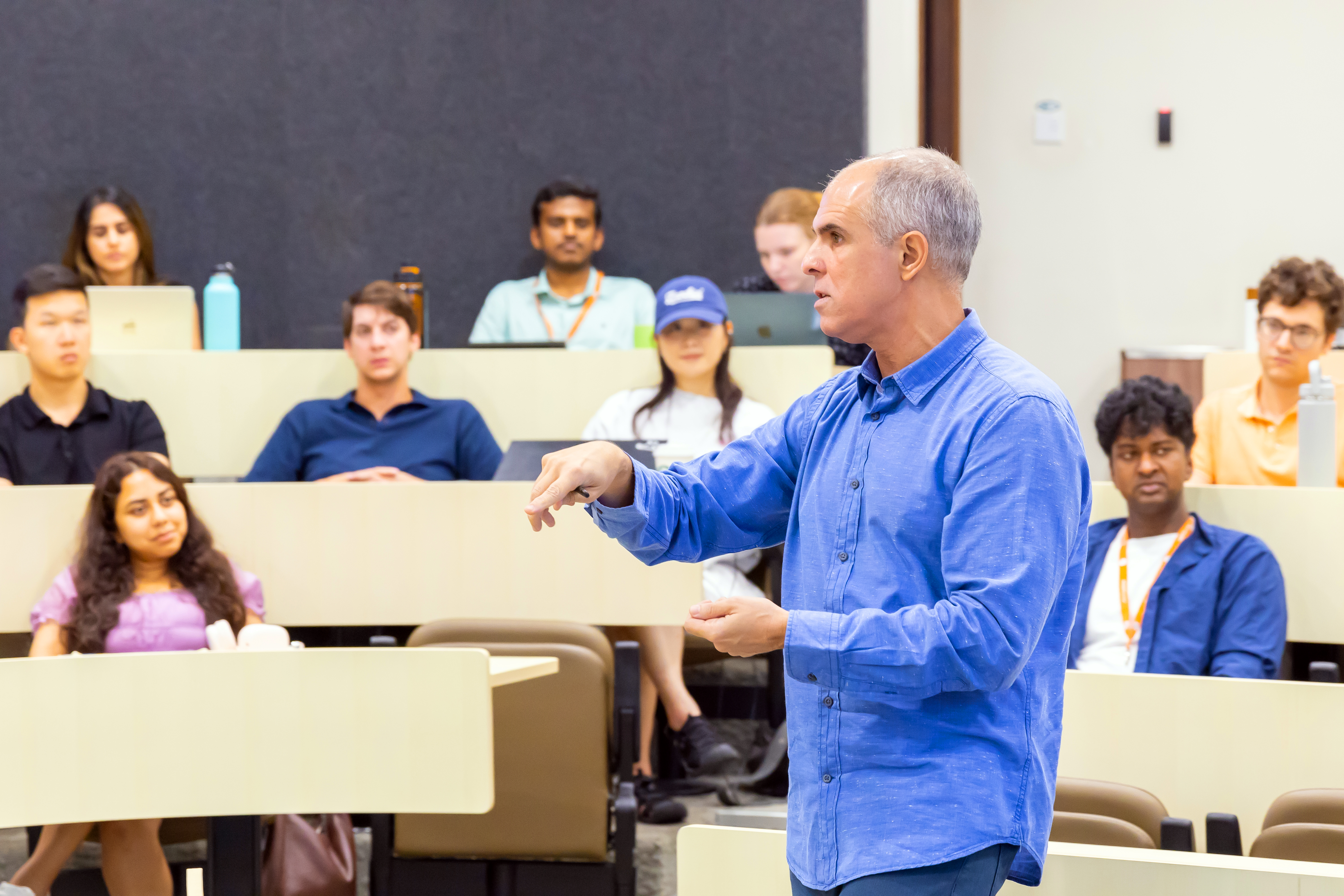
The single most useful thing I carried into this internship was a class I took in P3: Horacio Falcao's negotiation course at INSEAD. His whole framing is that negotiation is about creating value together with the other side, until there's enough value on the table that, when it comes to splitting the pie, paying for it is an easy yes.
I didn't expect to use that so literally, but it rewired almost every conversation I had this summer, from partnership calls to internal debates about which vertical to bet on. Value negotiation is about seeing where we could create value with potential customers with budgets and claiming our fair value for the value we create together.
I applied these principles to the customer development activities I led. Every customer discovery call started from zero: rather than asking prospective customers for their time, I made sure to add something of value in exchange, usually something about sharing what we learned in exchange for their sharing their time to see if our technology and experience could be useful for their work and the problems they’re trying to address. In return, we would learn who actually had a budget for this, what they already duct-taped together as a workaround, and what would actually get them to switch to our product/service.
What we learned in a lot of our conversations with AI companies, which was one vertical I targeted this summer, was about data. Everyone says data is the new oil, and it is, especially in an AI world, but here's the part I hadn't really internalised before this summer: most frontier AI has been built in the West and in China, which means the rest of the world, including Southeast Asia, needs its own sovereign AI, models that actually understand local languages, local culture, and the specific ways scams show up in their contexts. That's exactly the gap CheckMate's data and community sit in, and once I saw that, I knew we had something.
Challenge your perspectives and empower your future with the INSEAD one-year MBA programme
Consistently ranked amongst the top one-year MBA programmes in the world by the Financial Times, INSEAD’s full-time one-year MBA programme curriculum develops successful, thoughtful leaders and entrepreneurs who create value for their organisations and their communities.
Two moments I won't forget
There's a specific meeting I keep thinking back to: sitting across from a national AI lab, explaining that CheckMate's volunteers, the same people forwarding scam texts from their WhatsApp groups, had quietly built a dataset that could help make AI systems safer for millions of people across the region, as well as a platform for locally sourced data annotation and model evaluations.
The other moment was quieter. I spent time talking with nonprofit partners who work directly with migrant workers and refugees, hearing in specific, uncomfortable detail how job scams and fake documents target people who have the least room to absorb a loss or the least ability to double-check a suspicious offer, many of whom fall victim to human trafficking scams (some even becoming scammers themselves, as in the case of the scam centres in Cambodia).
So, now what
I came in this summer thinking I would create a product MVP for a new product or service by the end of the summer, but instead I spent more of my summer having customer discovery conversations and realising the importance of asking good questions with a win-win negotiation lens. In the end, we secured two partnerships: one incubation partnership with an AI lab, and the other a non-profit partnership with nonprofits in Singapore serving migrant workers.
From this internship, made possible through the Hoffman Centre, I'm leaving with an appreciation of how to build relationships with customers and how to create value together in such a way as to benefit the common good, while being business-minded.
CheckMate's next chapter is about proving those two things aren't actually in tension. I'm glad I got to spend a summer helping it get there.
This internship experience was supported by the INSEAD Hoffmann Institute Impact Internship Stipend.


