
Walking Alongside: What a Week in Cambodia Taught Me About Business as a Force for Good
Watching a young child's feet being braced in a family home in Cambodia, I realised that the question our class had been circling for weeks was far more human than any framework we had brought with us. Why do some parents not bring their children for treatment, even when they know it is available? Having spent the previous months reading case materials, joining calls with partners, and building early hypotheses from Fontainebleau, I thought I understood the problem. Sitting with that family, I understood how much I still had to learn.
In October, a group of about 20 INSEAD MBA students from the ‘26D class travelled to Cambodia for the fourth edition of the Business as a Force for Good (BFG) Practicum with MiracleFeet. Here is what we did, what we saw, and why this week has stayed with me more than almost anything else in my MBA.
We spent the week listening, questioning our assumptions, and working alongside local partners so that our recommendations reflected what implementation actually looks like on the ground.
Why clubfoot, and why MiracleFeet
Clubfoot is one of the most common birth defects in the world, affecting roughly one in every 800 children. Left untreated, it makes it impossible to walk properly, and the consequences extend far beyond mobility: lifelong disability, lost schooling, stigma, and poverty, often with mothers bearing the blame. What makes this so frustrating is that the condition is entirely treatable. In wealthy countries, children are treated at birth with a simple, non-surgical method of casting and bracing. Yet around 90% of children with clubfoot are born in low- and middle-income countries, where that treatment is often out of reach, and an estimated two million children are living with it untreated today.
MiracleFeet, a non-profit founded in 2010, exists to close that gap. Rather than running clinics directly, it secures funding and partners with local organisations in countries such as Pakistan, Cambodia, and the Philippines, providing supplies, training, advocacy, data systems, and financial and operational support. Its local partners then run clinics inside public hospitals and build the channels needed to find children and keep them in treatment.
The goal in every country is ambitious and specific: reach at least 70% of all children born with clubfoot, and eventually leave behind a national programme that can stand on its own. To date, MiracleFeet has helped transform the lives of more than 120,000 children across 38 countries through over 500 clinics.
The week in Cambodia
Spread across a week, the practicum combined strategy work, field visits, and close collaboration with MiracleFeet's national partners from across Asia. On the first day, we worked within our teams, gathered context from each partner, and began shaping initial strategies based on the work we had done remotely in the weeks before.
We also heard from a panel of leaders working in business, innovation, and healthcare in Cambodia, including INSEAD alumni Moni Anne T., Amandine Chaussinand, and Michel Dauguet, who gave us a much clearer picture of the local healthcare landscape.
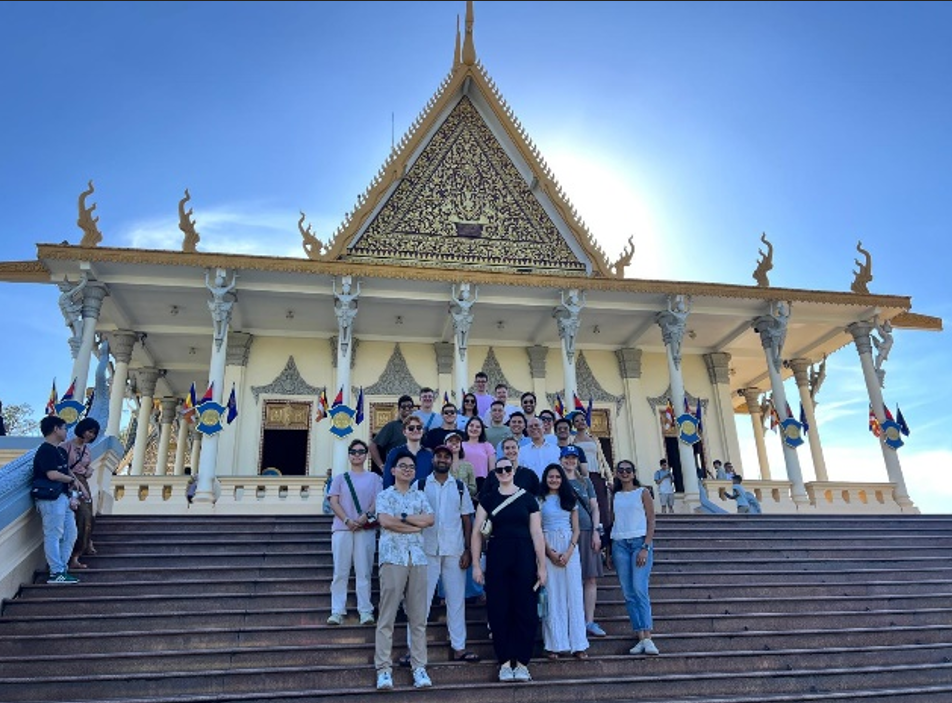
Over the following days, each team was introduced directly to the national partner for its assigned country. Working alongside them for several days, we dug into their specific challenges, tested our assumptions, and built recommendations together before presenting them back to the partners and to MiracleFeet's leadership. Additionally, a mixer with our professors gave us a chance to step back from the work, reflect as a group, and simply enjoy one another's company in a new city.
Across the teams, the recommendations reflected a few shared themes: finding more children earlier through better screening, opening more clinics without diluting quality, building new clinics around bracing services as well as doctors, and supporting families through the long bracing phase, when many stop treatment. Seeing different countries arrive at similar conclusions from very different starting points showed me how much these programmes can learn from one another.
Meeting the families
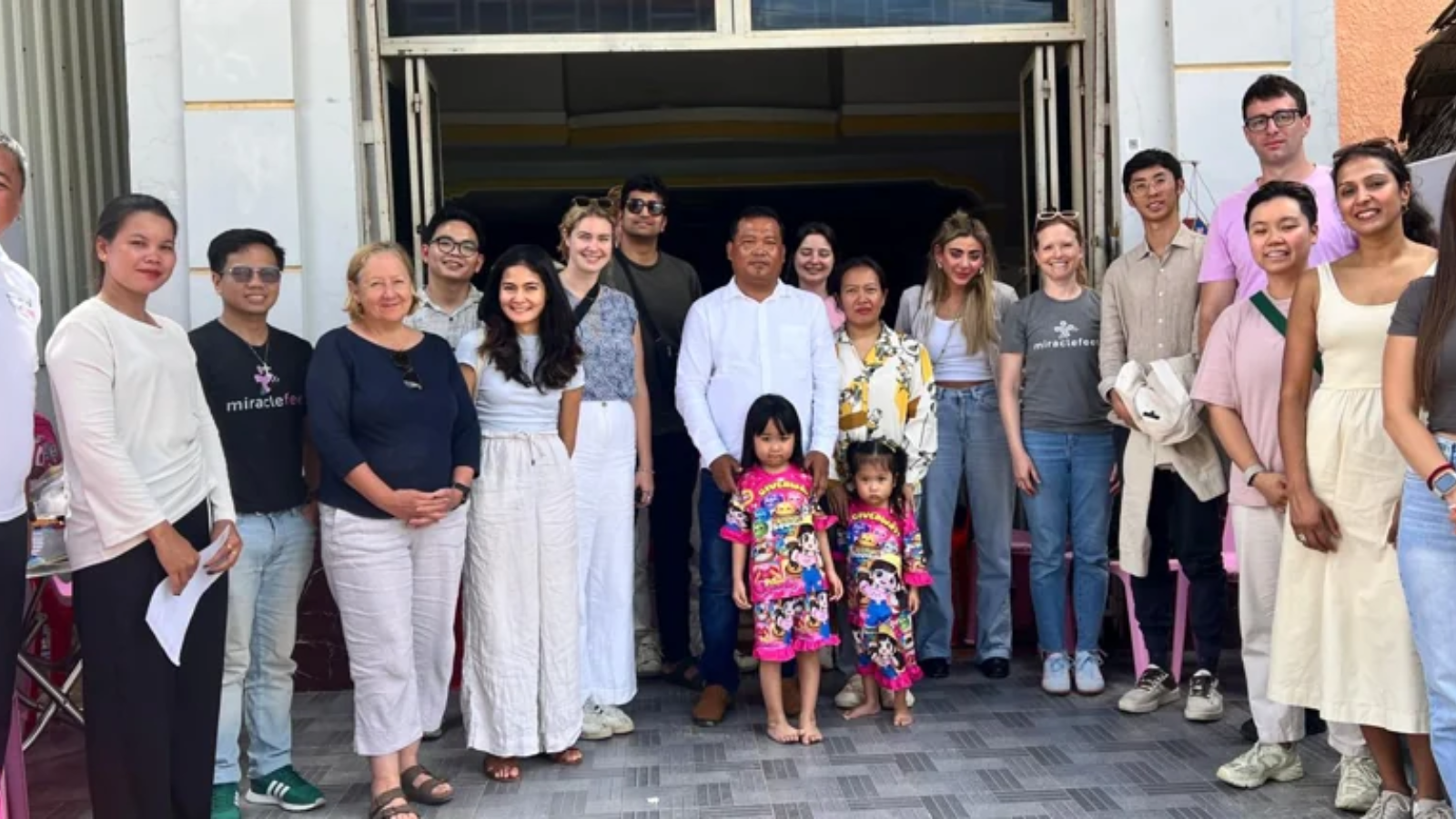
The most powerful part of the week was visiting the homes of children being treated for clubfoot and meeting their families. Speaking with the parents, asking questions, and listening to how they had found treatment, what it had cost them in time and travel, and what they hoped for their children made the stakes of our work impossible to ignore.
Meeting these families and hearing their stories gave each of us a real empathy for, and connection to, the grassroots reality of clubfoot in developing countries, and left us deeply grateful for the chance to contribute to this cause. Watching a parent gently fasten a brace onto their child's feet, knowing that this small daily act would decide whether that child could one day walk to school, play with friends, and grow up free of stigma, is a moment I will carry with me long after the MBA.
What struck me most was how layered the barriers are. Some parents believe their child can live with clubfoot; others face the cost, time, and logistics of reaching a hospital, often more than once over several years of follow-up. And while some barriers sit with families, many lie in the way care itself is delivered. Walking into those homes, I realised that improving access means more than convincing families to seek treatment; it means designing a system that makes staying in treatment possible.
Our work with PCP in Pakistan
My team, which included Clay Lin, Pietro Seracini, and Eva Sinha, worked with PCP (Paraplegic Centre Peshawar), MiracleFeet's implementing partner in Pakistan. In just three years, PCP has grown its programme from three to 21 clinics across six regions, with several more opening in the months ahead. That growth is a remarkable achievement, but the systems behind it had not kept pace: a headquarters team of only two people supporting every region, brace shipments that could take five to six months to arrive, clinics each following their own procedures, and families dropping out when a major hospital was overloaded or when they relocated with the seasons.
Working with PCP was an enlightening experience, largely because of something I had not fully appreciated before we arrived: PCP is a government organisation, and any plan it adopts must go through government approval and careful scrutiny. The previous INSEAD team had delivered a plan that PCP was implementing quite effectively. What PCP needed from us was a thoughtful continuation of that plan rather than a new direction, one that would build on its momentum and avoid bureaucratic questions about why the strategy had suddenly changed. Learning to design for continuity, credibility, and political reality was one of the most valuable lessons of the week.
With that in mind, we framed our work around a single goal, ensuring quality care throughout expansion, and built a phased roadmap across three areas: the programme team, the clinics, and the families they serve. For the programme, we recommended using the existing budget to hire two to three full-time staff now, and then organising the team by region, with dedicated leads for Sindh and Punjab, as PCP continues to grow.
For the clinics, we proposed placing one large brace order at the start of each six-month import exemption, with a smaller top-up if needed, and writing a standard clinic standard operating procedure (SOP) that gives every task, from family counselling to awareness, a named owner, piloted first at one new clinic and rolled out region by region with each memorandum of understanding (MOU) renewal.
For families, we suggested partnering with the overloaded Lahore children's hospital to refer patients to nearby PCP clinics for follow-up, pairing clinics as sister clinics so that families who move can continue treatment without interruption, and naming a dedicated owner for family counselling. Having owned the implementation plan in our final presentation, I focused on turning these ideas into short- and long-term steps that PCP could realistically adopt within its approval processes.
This experience taught me that in the public sector, the best recommendation is often the one an organisation can actually defend, fund, and sustain.
A different kind of MBA course
Much of the MBA, understandably, centres on finance, marketing, operations, and venture capital. This practicum felt fundamentally different. Working in a deeply international group, with classmates and partners from across Europe, Asia, the Middle East, and beyond, our focus was on giving back and on applying the tools we had learned to problems where the outcome is a child who can walk.
What I valued most was how practical it was. It also blurred the line I had drawn between business and public health: efficiency, quality control, scalability, and cost-effectiveness turned out to be central to social impact rather than separate from it. Additionally, none of us arrived with ready-made answers. Instead, we spent the week listening, questioning our assumptions, and working alongside local partners so that our recommendations reflected what implementation actually looks like on the ground. Meeting the children and their families gave that work a sense of urgency that is hard to find in a classroom.
None of this would have been possible without the faculty who led the practicum. I am grateful to Professor Stephen Chick, who has championed INSEAD's long-term collaboration with MiracleFeet across editions in Tanzania, The Gambia, Nepal, and now Cambodia, and to Ridhima Aggarwal, Director of the INSEAD Healthcare Management Initiative, for helping initiate and lead this year's trip. Their care in shaping the week, from the partner working sessions to the family visits, is a large part of why it felt so meaningful.
Having started my own NGO, The Helping Hand, at the age of 14, I have long believed that entrepreneurship is ultimately about the desire to make a difference wherever you are. This week in Cambodia reminded me why that belief matters, and I hope to carry its lessons on listening, continuity, and empathy into whatever I build next.
INSEAD is grateful to Aaro Eide (MBA’91J), Georg Madersbacher (MBA’90D), Moondance Foundation, Hugo van Berckel Award, and Andrew Land Fund for their generous support.
This programme is organised and supported by the INSEAD Healthcare Management Initiative.


