
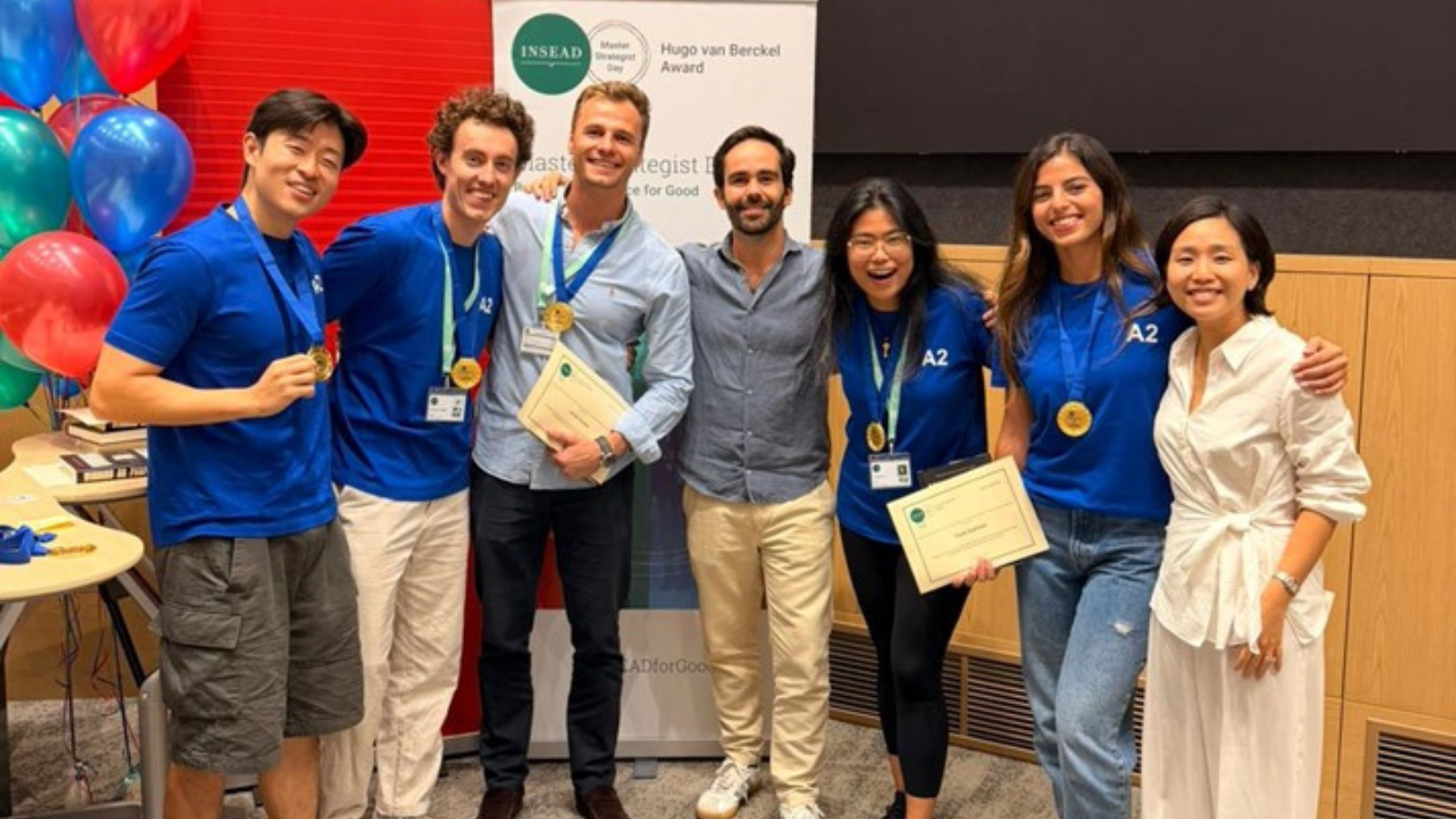
Master Strategist Day 2025: How Our Team Built a Bold, Credible Path for BGA in the United States
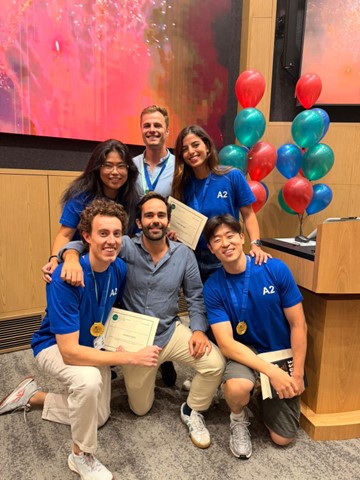
This blog was contributed by MBA'26J students Alex Byun, Farah Behkaazi, Giovanni Leone, James Campin and Yuexiao Li.
Master Strategist Day (MSD) has a very particular energy at INSEAD. Part strategy sprint, part pressure test, it is the moment where weeks of classroom discussions suddenly turn into a real consulting engagement with a real organisation, real ambiguity, and limited time. It is also the moment you see how your study group works under pressure.
This year’s organisation was Brave Generation Academy (BGA), an education provider combining personalised learning, technology-enabled delivery, and flexible school formats. With interest from a US-based investor, BGA came to MSD looking for a plan to expand across the United States over the next five years while maintaining quality, credibility, and financial viability. Sounds simple, until you realise the U.S. education landscape is a labyrinth of regulations, state-by-state differences, entrenched players, and sensitive trust dynamics.
The challenge was to cut through that complexity and design a path that was both ambitious and grounded in what BGA stood for at its core.
Our secret weapon: We slept
In true MSD fashion, the first evening was intense. Ideas flew, whiteboards filled, and we explored every possible entry path: partnerships with schools, corporate hubs, franchising, hybrid models, flagship sites, city-by-city rollouts.
And then, instead of pushing until 3 am as we heard many teams do, we made a deliberate decision. At 11 pm, we stopped and went home. It did not feel heroic. It felt pragmatic.
MSD is ultimately a delivery competition.
A strategy is only as strong as the clarity and confidence with which you can communicate it. And when you are exhausted, even good ideas lose their sharpness. Coming back rested gave us a level of focus and conviction that changed our momentum the next morning.
Finding our edge: Understanding the organisation better than the market
When we reconvened early the next day, something clicked. Instead of obsessing over every market segment, we went deep on BGA itself, its identity, its constraints, and what would actually preserve trust in a new environment.
A small detail in the case materials caught our attention: Oklahoma. While many teams focused on the broader U.S. macro picture, we took that seriously. It led us to rethink the entire question from “How can BGA expand in the U.S.?” to “How can BGA expand credibly without stretching trust or capital too thin?”
That shift changed the shape of our strategy. It moved us away from school-to-school expansion and toward partners who already hold trust and have existing infrastructure: corporations. Once we framed the problem that way, the path became increasingly clear.
The mentor effect
Our first Q&A with our Bain mentor was a turning point. He did not steer us toward a specific answer. Instead, he asked the questions that sharpened our direction and validated the creativity behind it. When he mentioned that our angle was unique among his teams, it came at exactly the right moment. It cut through the natural doubt that can creep in during MSD and freed us to focus on execution rather than reopening every decision.
That early signal of confidence mattered more than we expected.
The moment the energy shifted
We came into MSD with no expectations about winning. But something changed as the morning progressed. The more we refined the idea, the more it felt like the right solution, not just for the case, but for how BGA could genuinely succeed in the U.S.
There was a moment when the team looked at each other and, almost jokingly at first, said that we were going to get called to the auditorium, and then that we might actually win. James is naturally competitive, so once that idea surfaced, there was no going back.
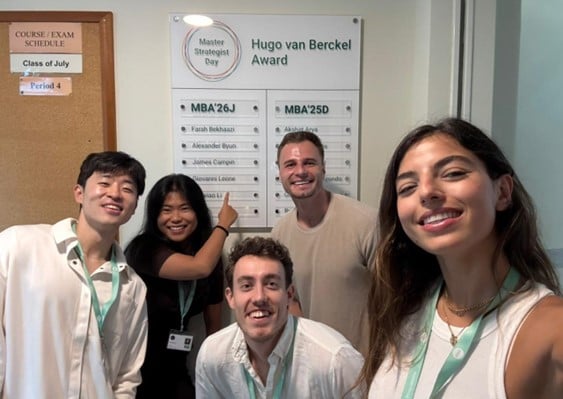
Before it was time to head to the auditorium, we were locked in. Rehearsing transitions, tightening phrasing, and giving each other quick notes. We were nervous, excited, and feeding off a shared sense of momentum. It did not matter how the final judging went; we felt like a team that believed in its solution.
The recommendation: Corporate campus hubs
We recommended that BGA enter the U.S. through corporate campus hubs – learning centres embedded within large employers that already support education programmes for younger children and have strong incentives to differentiate themselves to working parents.
This model aligned closely with what BGA stands for. It uses infrastructure that already exists. It provides immediate credibility through association with trusted employers. It creates a capital-light path to scale across multiple cities. And it offers a compelling benefit at a moment when employee support and family services matter more than ever.
Among the first potential partners we identified was an organisation in Oklahoma, which already invests heavily in youth and community initiatives. It was an example of how BGA could anchor in a specific market through an institution with both trust and reach.
How our team worked together
Our team brought a clear mix of strengths that fit naturally together. Alex anchored the macro-trends and risk perspective, drawing on his familiarity with the U.S. context to keep our ideas grounded in reality. James and Giovanni handled the financial modelling, ensuring the recommendation rested on numbers that could withstand scrutiny from investors.
Yuexiao pushed our thinking on partnerships, even identifying early opportunities like the Oklahoma City Thunder that later shaped our winning go-to-market plan.
Farah’s role was to integrate the thinking, build the storyline, and make sure every slide answered the one question that matters most in strategy: “So what?”
The way we worked together mirrored how real strategy teams operate.
Roles were not assigned; they emerged. We questioned each other’s reasoning without ego, built on each other’s ideas, and kept returning to what truly mattered for BGA. The process reinforced a lesson we will carry forward: a strong strategy needs both analytical depth and collective alignment – and that alignment comes from constant synthesis, active listening, and shaping one coherent narrative together.
Another differentiator for our team was recognising that how we presented the idea mattered just as much as the idea itself. Once the strategic spine was set, we shifted our focus to delivery. We practised our pitch repeatedly, refining not only the transitions between speakers but also the energy and chemistry we projected in the room.
We paid attention to the small things: staying visibly engaged and smiling when we weren’t the ones speaking, maintaining eye contact, and communicating enthusiasm that made the recommendation feel alive rather than academic.
We approached the presentation like a team sport – each person owning their segment while supporting the others in real time. Those elements, while subtle, made the story feel unified and confident. It wasn’t just the model or the slides that resonated with the judges; it was the sense that we believed in the idea, believed in each other, and enjoyed sharing the narrative we had built together.
What MSD taught us
- MSD taught us as much about teamwork as it did about strategy.
- We learned that rest can be a strategic choice.
- We learned the value of committing to a bold direction rather than following the familiar one.
- We experienced how leadership can rotate naturally when trust is strong.
- And we saw how a shared sense of conviction can completely change the energy of a team.
- Winning felt less like luck and more like the natural outcome of how we chose to work: start wide, focus early, trust the process, rehearse with intention, and deliver with clarity.
- Beyond the winning recommendation, MSD gave us something far more lasting: a hands-on blueprint for building effective teams and solving complex problems.
INSEAD is grateful to the donors of the Hugo van Berckel Award, the Moondance Foundation, and the Andrew Land Fund, for their generous support.


