
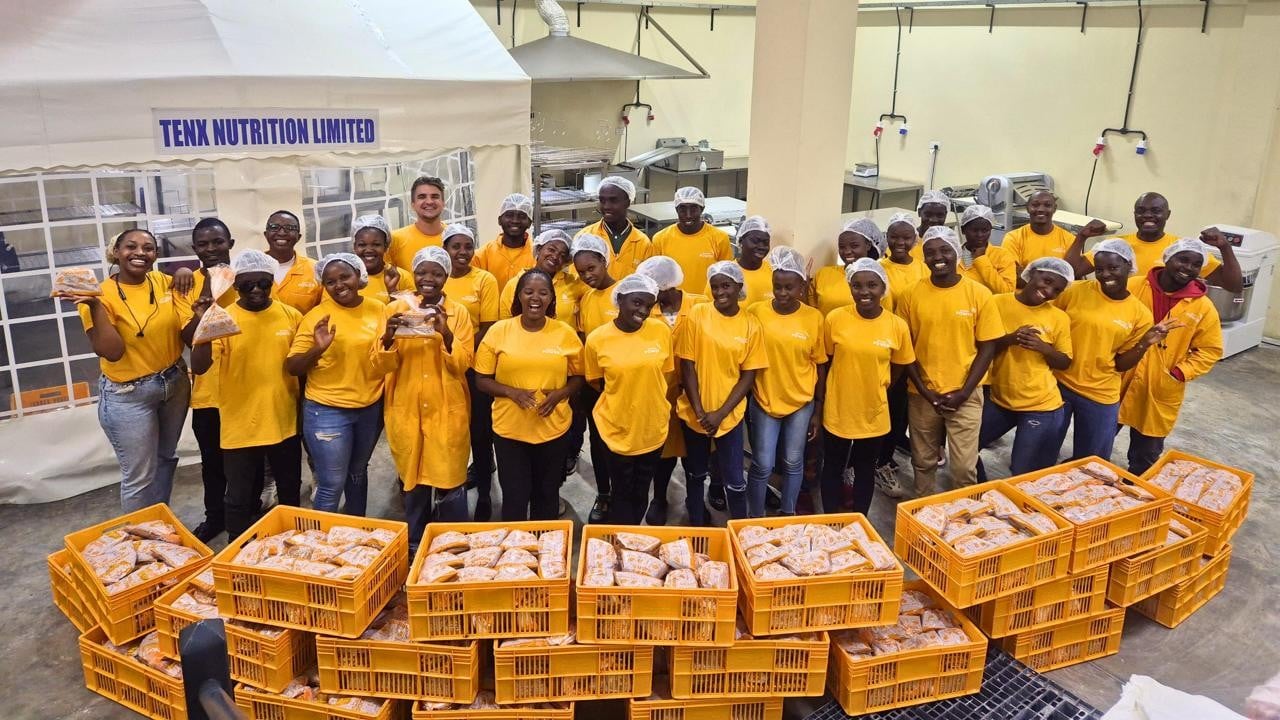
My Social Impact Internship with TenX Nutrition in Kenya
For my INSEAD summer, I chose to spend time working with TenX Nutrition, an early-stage food business in Kenya focused on making everyday foods more nutritious and accessible.
TenX’s main product is a fortified mandazi, a popular breakfast food and snack found across Kenya and much of East Africa. The idea behind the business is relatively simple: rather than asking people to change what they eat, TenX takes a food that is already widely consumed and improves its nutritional value while keeping it affordable. The products are sold primarily through neighbourhood shops and other channels that already serve lower-income consumers.
The opportunity appealed to me because it brought together several areas I had been working in before INSEAD. I started my career working in agricultural operations in Uganda, before moving into consulting with McKinsey in Kenya. I later joined Veris Investments, where I worked on investments across the food value chain in sub-Saharan Africa, and spent time in Tanzania working commercially to scale one of the country’s fastest growing FMCG companies. Across these roles, I had become increasingly interested in what it actually takes to build real businesses that can serve mass-market consumers in Africa.
TenX gave me the chance to look at that question from a very different perspective.
Instead of working with a larger company or assessing a business as an investor, I was working alongside a small team trying to build the commercial foundations of a young company while it was still evolving quickly.
My work over the summer covered commercial strategy, sales and distribution, financial planning and fundraising. I also worked with the team to design a route-to-market model that can sustain them as they scale. Finally, I supported a successful fundraise of $1M USD, through a combination of asset financing, grant, and an equity investor to support the next phase of the company’s scale-up.
Designing the route-to-market for scale-up was one of the experiences I enjoyed most. In larger organisations, it is often possible to separate strategy from execution. At TenX, the two were closely connected. A decision about the sales model could quickly become a question about production capacity, working capital or hiring. Likewise, assumptions that looked sensible in a financial model often needed to be revisited once we spent more time with distributors, shop owners and the sales team.
I also came away with a much greater appreciation for how difficult it is to build a business around very low-priced consumer products. When the end product needs to remain affordable, there is little room for inefficiency across manufacturing, distribution or sales. At the same time, the company needs to invest in food quality, nutrition, its team and the systems required to grow.
Working through those trade-offs made the experience particularly interesting for me.
More broadly, the internship reinforced something I had seen in my previous roles in Africa: social impact and commercial performance are often much more closely linked than they initially appear. To truly drive impact, it takes a gritty effort across challenging social and economic environments.
For a business such as TenX, reaching more consumers ultimately depends on building a company that can manufacture efficiently, distribute reliably in a competitive environment, and generate enough margin to continue growing. The commercial fundamentals are therefore an important part of creating lasting impact from the very beginning rather than something separate from it.
It was also rewarding to spend the summer in Kenya working on a product and a consumer market that felt familiar to me. After working across different parts of East Africa, TenX gave me the opportunity to see the earliest stages of building a consumer company and to contribute directly to some of the choices that will shape how it grows. I am grateful to the INSEAD Hoffmann Institute for supporting the experience through the Social Impact Internship programme, and to the TenX team for giving me the opportunity to work alongside them during an important stage of the company’s development.
This internship experience was supported by the INSEAD Hoffmann Institute Impact Internship Stipend.


