
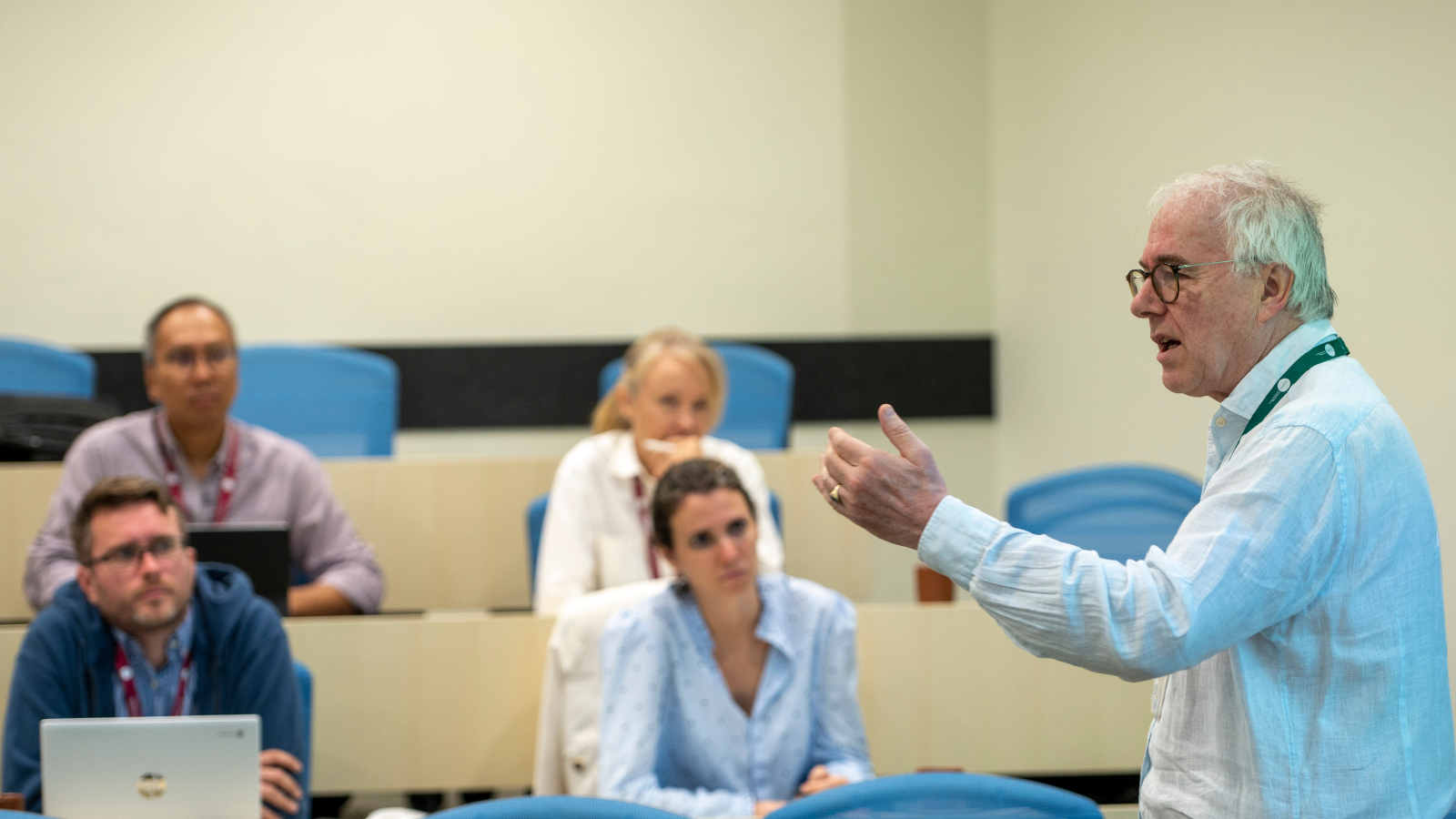
In a world marked by uncertainty and repeated cycles of conflict, a fundamental question continues to surface: what can we learn from the past?
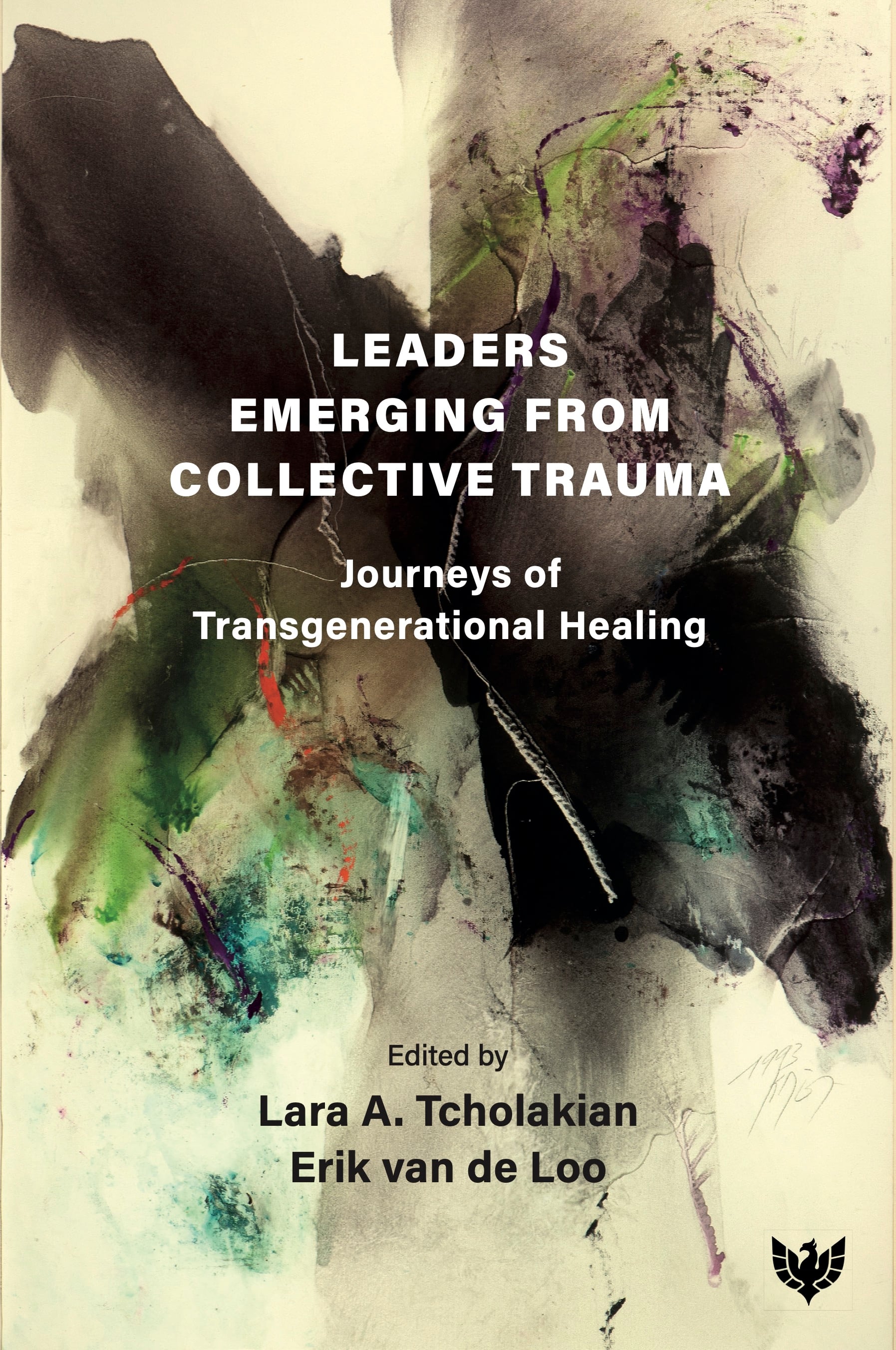
For Erik van de Loo, Affiliate Professor of Organisational Behaviour and co-director of the Executive Master in Change at INSEAD, and Lara Tcholakian, Founding Partner of Elevate and Executive Master in Change Alumna, this question sits at the heart of their recent collaboration: Leaders Emerging from Collective Trauma: Journeys of Transgenerational Healing (Karnac Books, 2026).
The book brings together nine personal stories of Executive Master in Change Alumni from across the globe. Each story explores what happens when leaders turn toward their inherited histories, rather than away from them, and begin to understand how those histories shape the way they lead.
From Executive Master in Change to a shared inquiry
Their collaboration began, like many Executive Master in Change journeys, with a personal search.
For Lara Tcholakian, that search emerged during her time as an executive. Despite an already strong academic and professional background, she felt something was missing—something deeper, harder to articulate. EMC became a turning point.
At the same time, Erik van de Loo had been shaping that learning journey for others. As one of the founders and programme directors of the Executive Master in Change, launched in 2001, he has spent decades working at the intersection of leadership, psychoanalysis, and organisational behaviour. Trained as a psychoanalyst and organisational specialist, his work explores board dynamics, the complexity of change, and the often invisible forces, silence, unconscious patterns, collective experiences, that influence decision-making.
It was within this context that Lara and Erik met. Their conversations revealed a common interest in collective trauma and leadership, an area that felt both deeply personal and insufficiently explored.
What began as an exploration of leadership soon opened into a much broader inquiry: how personal, family, and societal forces interact in shaping who we are as leaders. After completing the programme, Lara pursued a PhD on the topic, with Erik van de Loo as her co-supervisor.
Over time, this work evolved into a shared conviction that leadership cannot be understood without acknowledging the role of collective and historical experience.
“What we do in a boardroom on an ordinary Tuesday may be shaped by forces that began long before we were born.”
A timely conversation
The idea for the book emerged gradually, but its importance has become increasingly clear.
Through years of research and conversations with hundreds of leaders, one insight stood out: the past is never truly behind us. It continues to live through patterns, emotions, and reactions that often remain invisible.
Today, in a world where crises and conflicts repeatedly resurface, that insight feels more relevant than ever: "If we think we can close the past and leave it behind, it will show up again, often in new forms."
At the same time, the EMC programme has provided a unique space to explore these questions. With participants from over 90 countries, it has created a rare opportunity to reflect on how different histories, national, political, and cultural, shape leadership in distinct yet connected ways.
Leading people and organisations through strategic change
The INSEAD Executive Master in Change (EMC) is a leading change management programme, designed for senior professionals who drive organisational transformation. You will learn how to build and implement an effective change management process and strategy, apply proven behavioural and systems-based frameworks and methodologies, lead people through complex organisational change, and drive transformation across global organisations.
Learn more
The leader as an instrument
At the core of EMC lies a simple but powerful idea: the leader is the primary instrument of change. This means that effective leadership requires more than skills or frameworks. It requires a deeper understanding of oneself, not only at a personal or organisational level, but also at a historical one. This is where the concept of historical consciousness becomes central.
Turning toward the past
Historical consciousness begins with a shift in perspective. Rather than seeing the past as something distant or completed, it recognises that history continues to live within us. It shapes instincts, fears, loyalties, and ways of making sense of the world. For many leaders, this influence operates unconsciously.
“There is a difference between being unknowingly driven by history and turning around to face it with open eyes.”
Developing historical consciousness is not simply an intellectual exercise. It is a lived process, one that involves reflection, emotional engagement, and often confronting difficult or painful inheritances. Through this process, leaders begin to gain something that feels both simple and transformative: the ability to choose what to carry forward, what to leave behind, and how to relate differently to what they have inherited.
What changes in leadership
When leaders engage in this kind of work, the shift is often described not as dramatic, but as deeply meaningful. One of the most significant changes is a movement away from automatic reactions. Instead of responding immediately to pressure, leaders begin to pause. They become curious about their own responses, where they come from, and what shapes them.
This creates space for something different: greater patience, greater empathy and a more grounded way of leading.
Over time, many begin to reinterpret their own histories. What once felt like a limitation or burden may reveal unexpected strengths, resilience, adaptability, or the courage to act in uncertain conditions.
"The moment a leader realises they can be a force for good in a way they never believed, something shifts."
Stories that bridge differences
One of the most powerful aspects of the book lies in the diversity of its voices. The contributors come from vastly different cultural and historical contexts, shaped by colonialism, political repression, war, and displacement. Yet, as the stories unfold, something striking appears: a shared human experience. "Beneath different histories, there is something that connects us, a human grammar of loss, resilience, and dignity."
Time and again, contributors recognised parts of themselves in each other’s journeys. What could have been differences became points of connection. In this way, the book offers a subtle but powerful shift in perspective:
"Wounds do not have to separate us, they can become bridges."
A responsibility to the future
At its heart, the book is not only about understanding the past, but it is also about what leaders choose to do with it. Because while we do not choose the histories we inherit, we do influence how they continue.
Through awareness and reflection, leaders can begin to interrupt patterns that might otherwise be passed on within organisations, families, and societies. This work is neither quick nor easy. It requires patience, honesty, and the willingness to engage with complexity. But even small steps can have a meaningful impact. "The inner work of a leader is never private; it shapes teams, organisations, and future generations."
A call to begin within
Ultimately, Leaders Emerging from Collective Trauma is an invitation. An invitation to look inward, to acknowledge the histories we carry and to engage with them consciously. Not in the hope of immediate transformation, but with the understanding that change unfolds over time, often quietly, and often invisibly at first.
"If we want to change the world, it begins with the change we are willing to make within ourselves."
From that starting point, something begins to shift, not only in how leaders see themselves, but in how they shape the world around them.
Start your INSEAD journey with us and sign up for this programme now.
Apply Now


