
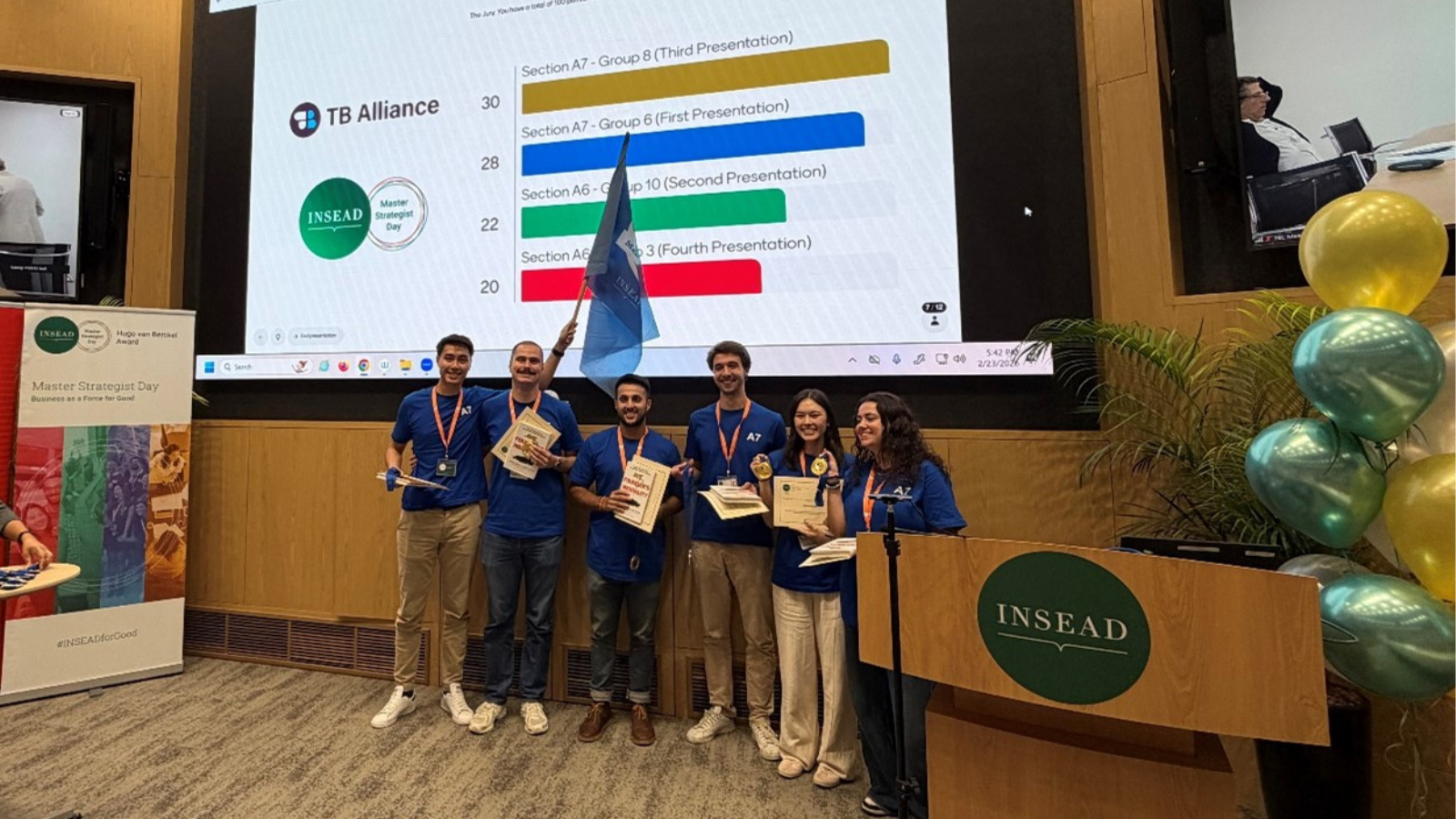
From Discovery to Delivery: Crafting a Strategy for Global Tuberculosis Treatment Access
This blog was co-authored by the following students of the MBA'26D Class: Bernardo Campos Leichsenring Franco, Melanie Khalil, Nigel Tan, Quentin Rühl, Raj Birgi and Siena Belda.
The case
Tuberculosis, or TB, is a contagious bacterial disease that most often affects the lungs and can be fatal if not treated properly. TB Alliance is a non-profit group that develops new TB treatments and works to make them available around the world. This case was the focus of our Master Strategist Day (MSD), where we were asked to design a global access strategy for Ultra, a next-generation treatment for all forms of TB, so that it could move from approval to broad patient access much faster.
The challenge was to find a strategy that was both bold and realistic, especially in countries with a high TB burden.
The process
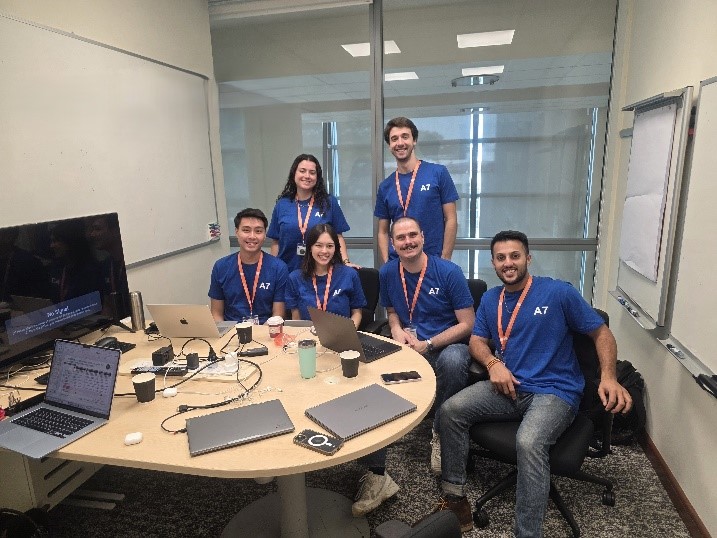
Once we got the case, we spent a significant amount of time reading it closely, turning to the whiteboard to write down questions, and discussing them until we felt we had all arrived at the same understanding of the problem. We drew timelines to make the case feel more concrete, and when the TB Alliance representative joined us, we treated her as a valuable resource for testing our assumptions and filling in the gaps. That first stage mattered because it gave us a shared base before we started making choices.
From there, the room became much more animated. We threw every idea onto the whiteboard without worrying too early about whether it was good or bad, and that openness helped us see the full range of possibilities before narrowing anything down. After the first round of discussion, only about five ideas really stood out, but even then, it was not obvious which direction deserved to win. By the second day, the debate had become more intense, and the challenge was less about generating ideas than about deciding which ones could survive proper scrutiny.
At that point, we split into smaller groups so we could research the options more efficiently and return with stronger arguments. That shift was important because it turned disagreement into momentum rather than frustration. Looking back, the process felt less like a straight line than a series of revisions. First understanding, then broad exploration, then debate, and finally a more disciplined comparison of the strongest ideas.
Challenge your perspectives and empower your future with the INSEAD one-year MBA programme
Consistently ranked amongst the top one-year MBA programmes in the world by the Financial Times, INSEAD’s full-time one-year MBA programme curriculum develops successful, thoughtful leaders and entrepreneurs who create value for their organisations and their communities.
The recommendation
Our final recommendation was to make Ultra a BRICS-led global access effort. BRICS refers to the following countries: Brazil, Russia, India, China, Indonesia, and South Africa. The idea was to stop treating each country separately and instead create a shared process for trials, approvals, and procurement so the treatment could move faster across the countries that carry about 50% of the world’s TB burden.
What made this option appealing was its scale. BRICS countries account for a very large share of global TB cases, and several of them want local evidence before adopting a new treatment. By working together, TB Alliance could avoid repeating the same work in each country, bring in non-Western funding, and shorten the path from clinical success to patient access. We saw this as the one option that could deal with the main bottlenecks at once: weak evidence confidence, fragmented leadership, lack of capital, procurement complexity, and heavy operational burden.
We also looked at two other options. The first was an AI-supported rollout model, which would use a digital platform to help run trials, monitor patients, and generate evidence more quickly. The second was a Health Impact Credit model, which would let verified TB outcomes generate credits that outside buyers could fund. Both were interesting, but neither solved the problem as fully as the BRICS option.
What we learned
Strategy is not just about having ideas. It is about knowing which ideas to keep and which ones to let go.
We learned that on day one, when we filled the whiteboard with every idea we had, we watched most of them disappear. The hard part was picking the five strongest ones and, later, deciding which one could really help TB Alliance.
We also learned that debate works if you manage it well. Our toughest talks occurred when we couldn't agree on what would work. Instead of voting, we split up, did more research, and came back ready to argue. That turned arguments into progress.
In the end, the process gave us confidence that we found a bold path forward for TB Alliance.
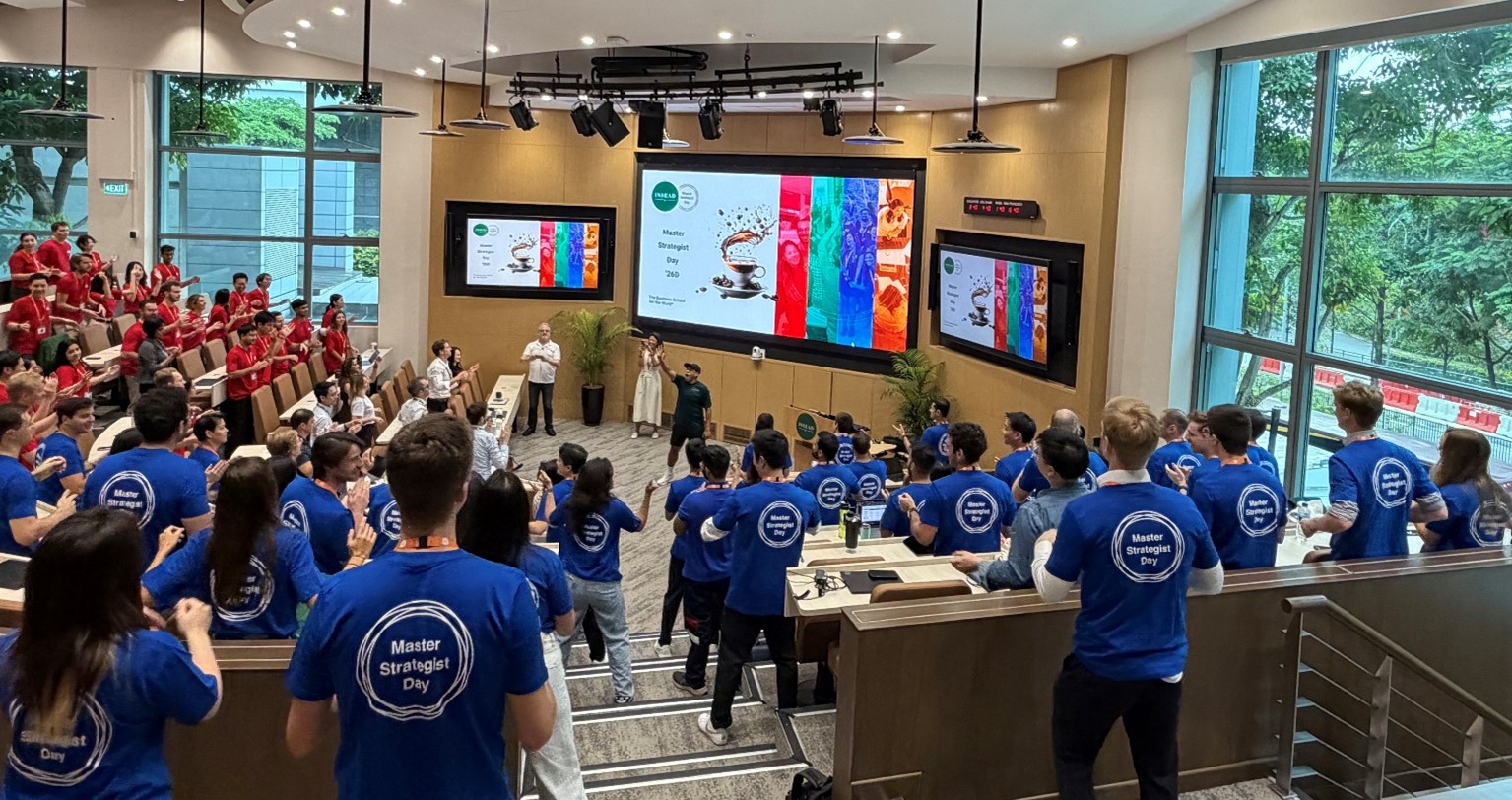
MSD takeaways
What made the MSD experience especially meaningful was the sense of giving back through work that could create real social impact.
Knowing that our recommendations were designed to help accelerate access to TB treatment made the project feel larger than a typical academic exercise. It reinforced the value of using our skills to support organisations working to improve global health outcomes.
INSEAD is grateful for the generous support of Dr Simba Gill (MBA’90D), Åro Eide (MBA’91J), Georg Madersbacher (MBA’90D), Henry Engelhardt (MBA’88J), Andrew Land (MBA’99J), and the class of Hugo van Berckel (MBA’89D).


